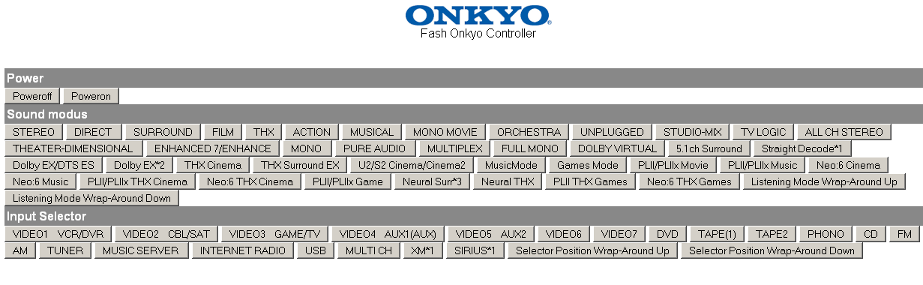
Back in 2009 i’ve posted my web controller for Onkyo in a forum.
Several people build on that source and made android/iphones app using this as example.
It uses pfsockopen with raw packets in php. Spend a lot of work reverse engineering the tcp headers to be send. Another fun trick was re-using a trick i’ve used for my ipcam controller and dartabase. (Dart game application)
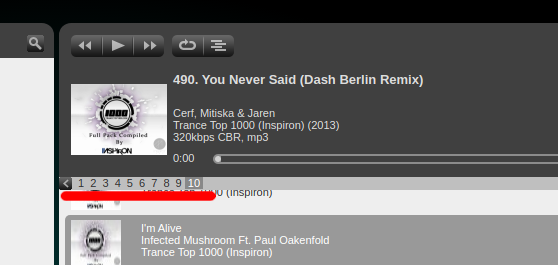
I’ve made a alteration in my logitechmediaserver (squeezebox server) which embedded a onkyo volume control part in the gui.
Volume Onkyo in LMS
Part of code
<?php
// :colorscheme elflord
// Henri Aanstoot
// Onkyo Reciever Web Interface 2009
// Version 0.6b - 23 Oct 2009
// EDIT THIS
$receiveripnumber="your.onkyo.ip.here";
$receiverlistenport="60128";
// maximum to set volume (0-100)
// !! some have 64 max????
$volumemax=60;
// (i had to enable this port by going onto the menu's on my Onkyo
// ---- NO EDITING BELOW THIS LINE

// trick browser into staying on same page
$ibrowser = strpos($_SERVER['HTTP_USER_AGENT'],"iPhone");
if ($ibrowser == false) {
header("HTTP/1.0 204 No Response");
}
// test write to file
//$fp=fopen("test.txt", "wb");
// write to Receiver
$fp = pfsockopen($receiveripnumber, $receiverlistenport, $errno, $errstr, 30);
//get command from post form
$command=$_POST['cmd'];
//get volume if cmd is numeric
if(is_numeric($command))
 {
if ($command > $volumemax) { $command=$volumemax; }
echo $command;
  $vol=str_pad(dechex($command), 2, '0', STR_PAD_LEFT);
  $command="!1MVL$vol";
 }
// Calculate header and datapacket lengths
$length=strlen($command);
$length=$length+1;
$total=$length+16;
$code=chr($length);
// total eiscp packet to send
$line="ISCP\x00\x00\x00\x10\x00\x00\x00$code\x01\x00\x00\x00".$command."\x0D";
#fputs($fp,$line,$total);
// write
fwrite($fp, $line);
// rest status part
//    while (!feof($fp)) {
//        echo fgets($fp, 128);
//    }

fclose($fp);

if ($ibrowser == true) {
print "<html>
<head>
<title>Sending Command...</title>`
<meta http-equiv=\"refresh\" content=\"0;url=index.php\">
</head>
<body></body>
</html>";
}

?>
List of command’s
header,Power
!1PWR00,Poweroff
!1PWR01,Poweron
header,Muting
!1AMT00,Audio muting off
!1AMT01,Audio muting on
!1AMTQSTN,Audio muting stat
header, Speaker A/B (Main/Front?)
!1SPA00,Speaker A Off
!1SPA01,Speaker A On
!1SPB00,Speaker B Off
!1SPB01,Speaker B On
header,Sound modus
!1LMD00,STEREO
!1LMD01,DIRECT
!1LMD02,SURROUND
!1LMD03,FILM
!1LMD04,THX
!1LMD05,ACTION
!1LMD06,MUSICAL
!1LMD07,MONO MOVIE
!1LMD08,ORCHESTRA
!1LMD09,UNPLUGGED
!1LMD0A,STUDIO-MIX
!1LMD0B,TV LOGIC
!1LMD0C,ALL CH STEREO
!1LMD0D,THEATER-DIMENSIONAL
!1LMD0E,ENHANCED 7/ENHANCE
!1LMD0F,MONO
!1LMD11,PURE AUDIO
!1LMD12,MULTIPLEX
!1LMD13,FULL MONO
!1LMD14,DOLBY VIRTUAL
!1LMD40,5.1ch Surround
!1LMD40,Straight Decode*1
!1LMD41,Dolby EX/DTS ES
!1LMD41,Dolby EX*2
!1LMD42,THX Cinema
!1LMD43,THX Surround EX
!1LMD50,U2/S2 Cinema/Cinema2
!1LMD51,MusicMode
!1LMD52,Games Mode
!1LMD80,PLII/PLIIx Movie
!1LMD81,PLII/PLIIx Music
!1LMD82,Neo:6 Cinema
!1LMD83,Neo:6 Music
!1LMD84,PLII/PLIIx THX Cinema
!1LMD85,Neo:6 THX Cinema
!1LMD86,PLII/PLIIx Game
!1LMD87,Neural Surr*3
!1LMD88,Neural THX
!1LMD89,PLII THX Games
!1LMD8A,Neo:6 THX Games
!1LMDUP,Listening Mode Wrap-Around Up
!1LMDDOWN,Listening Mode Wrap-Around Down
header,Input Selector
!1SLI00,VIDEO1    VCR/DVR
!1SLI01,VIDEO2    CBL/SAT
!1SLI02,VIDEO3    GAME/TV
!1SLI03,VIDEO4    AUX1(AUX)
!1SLI04,VIDEO5    AUX2
!1SLI05,VIDEO6
!1SLI06,VIDEO7
!1SLI10,DVD
!1SLI20,TAPE(1)
!1SLI21,TAPE2
!1SLI22,PHONO
!1SLI23,CD
!1SLI24,FM
!1SLI25,AM
!1SLI26,TUNER
!1SLI27,MUSIC SERVER
!1SLI28,INTERNET RADIO
!1SLI29,USB
!1SLI30,MULTI CH
!1SLI31,XM*1
!1SLI32,SIRIUS*1
!1SLIUP,Selector Position Wrap-Around Up
!1SLIDOWN,Selector Position Wrap-Around Down
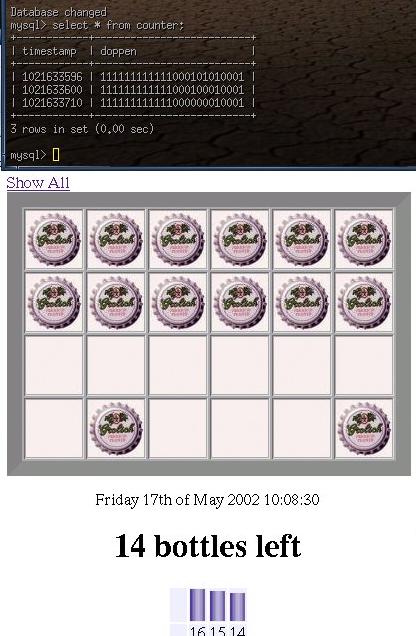
Post in 2002 due to screenshot .. dont know when i build it, some years before.
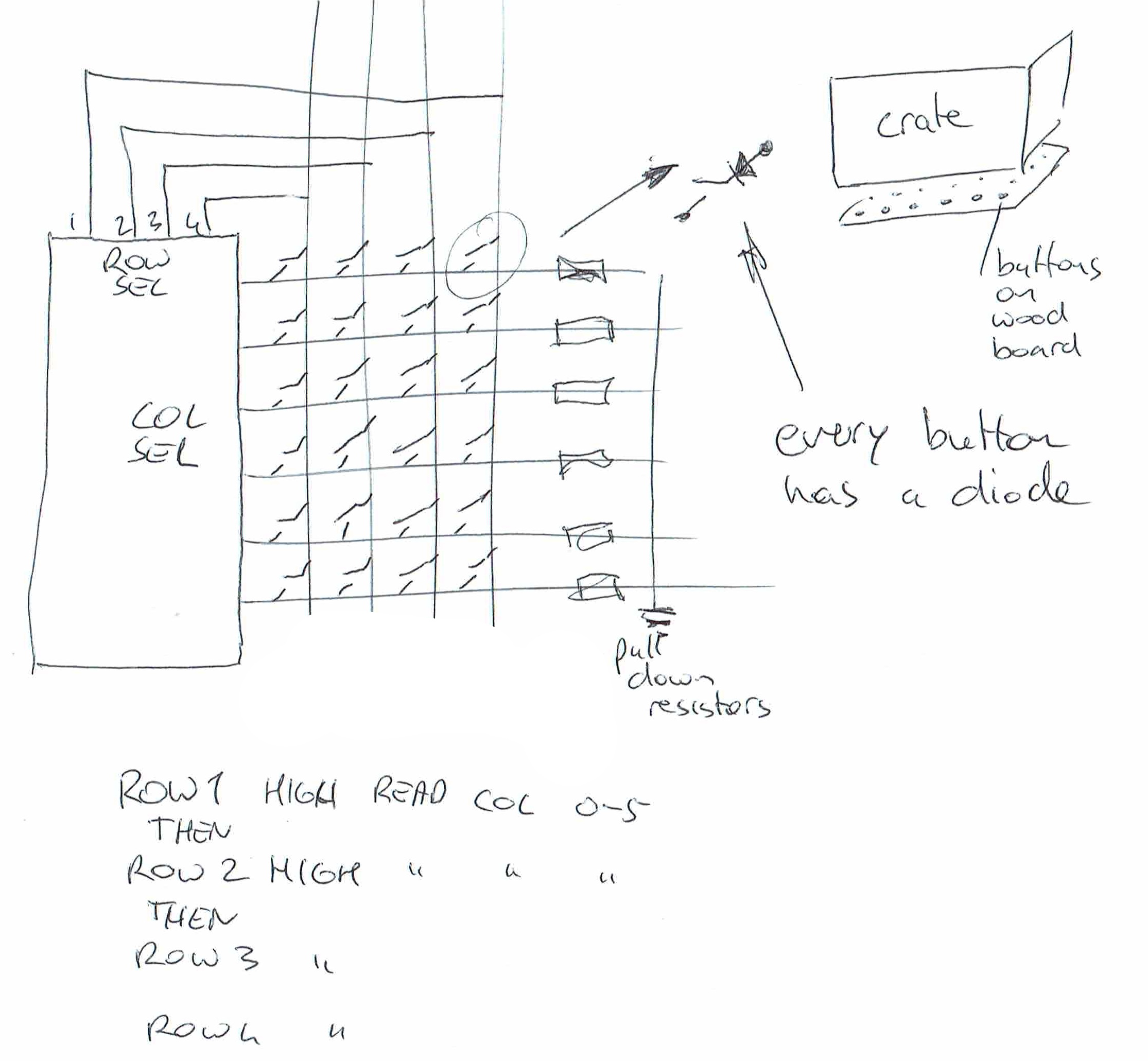
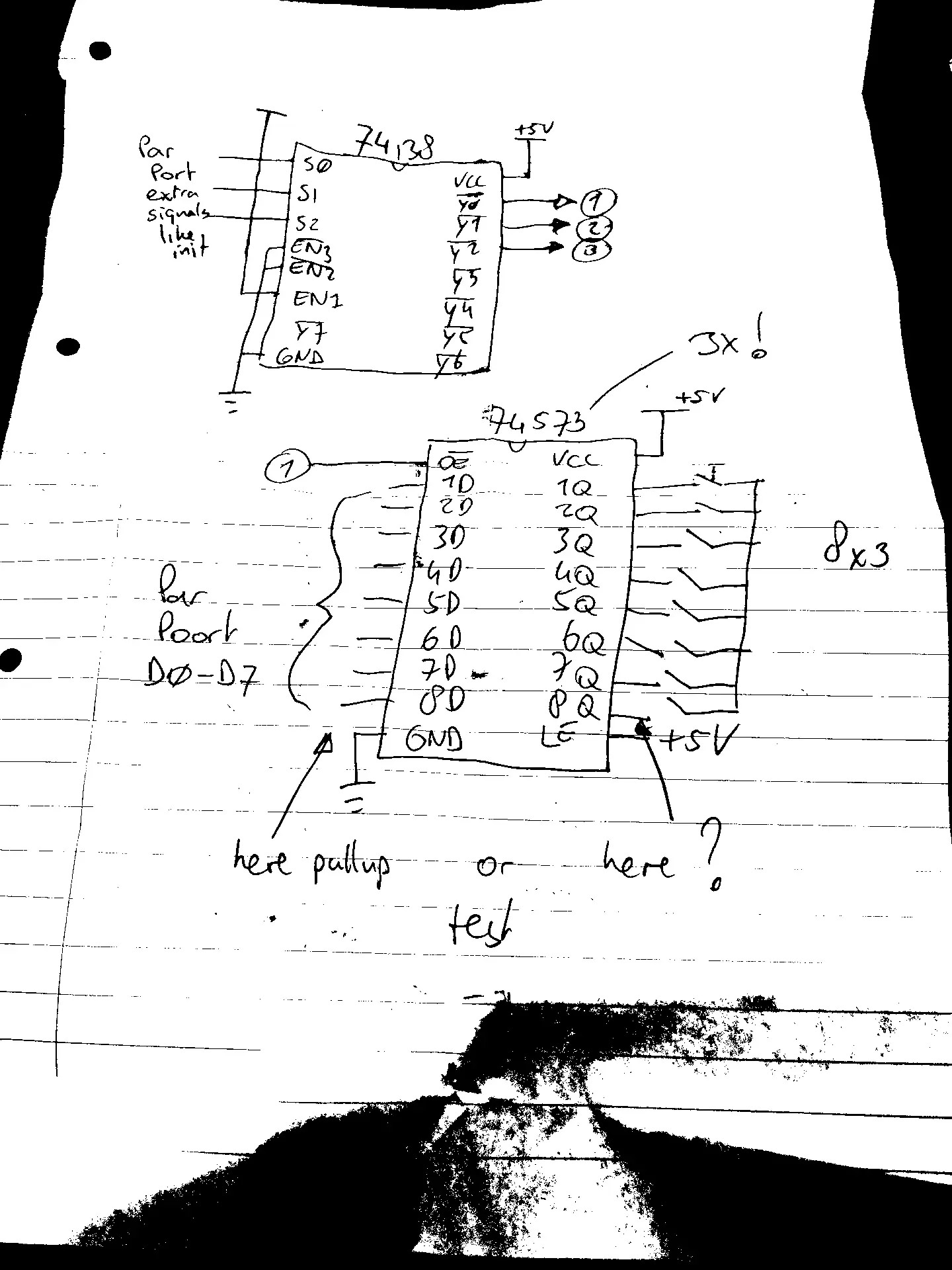
Using 24 pushbuttons and a IO expander, i could count the bottles in a crate. Probably used something like a hef4067 ?? UPDATE: Nope I used 74138 and 74573, see new found schematic
Now i probably use a weight sensor or a beer cap counter using a webcam image.
Notification to email and shopping list printer.
Web Interface
Every bottle had to be placed back upside down so the opening of the bottle would not press down on the button. Later i used springs which could hold a empty bottle elevated above the button. The weight of a full bottle would press on the button.
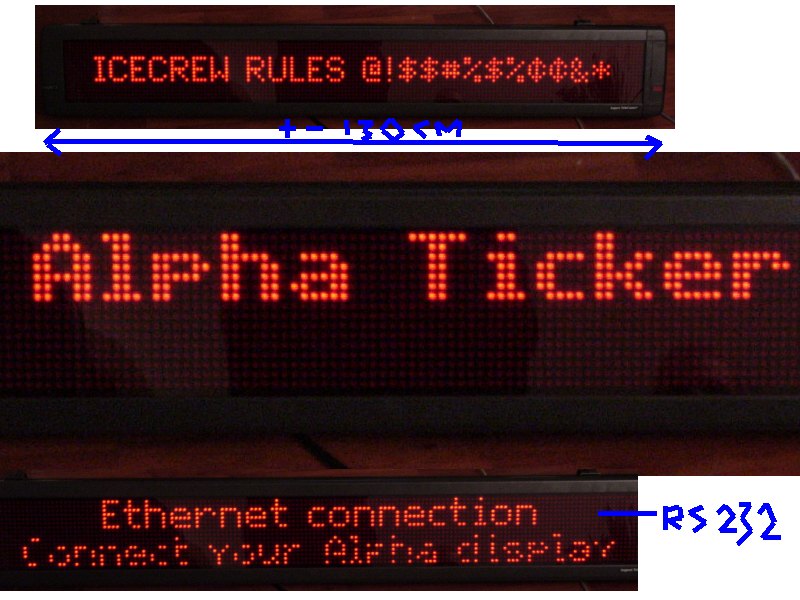
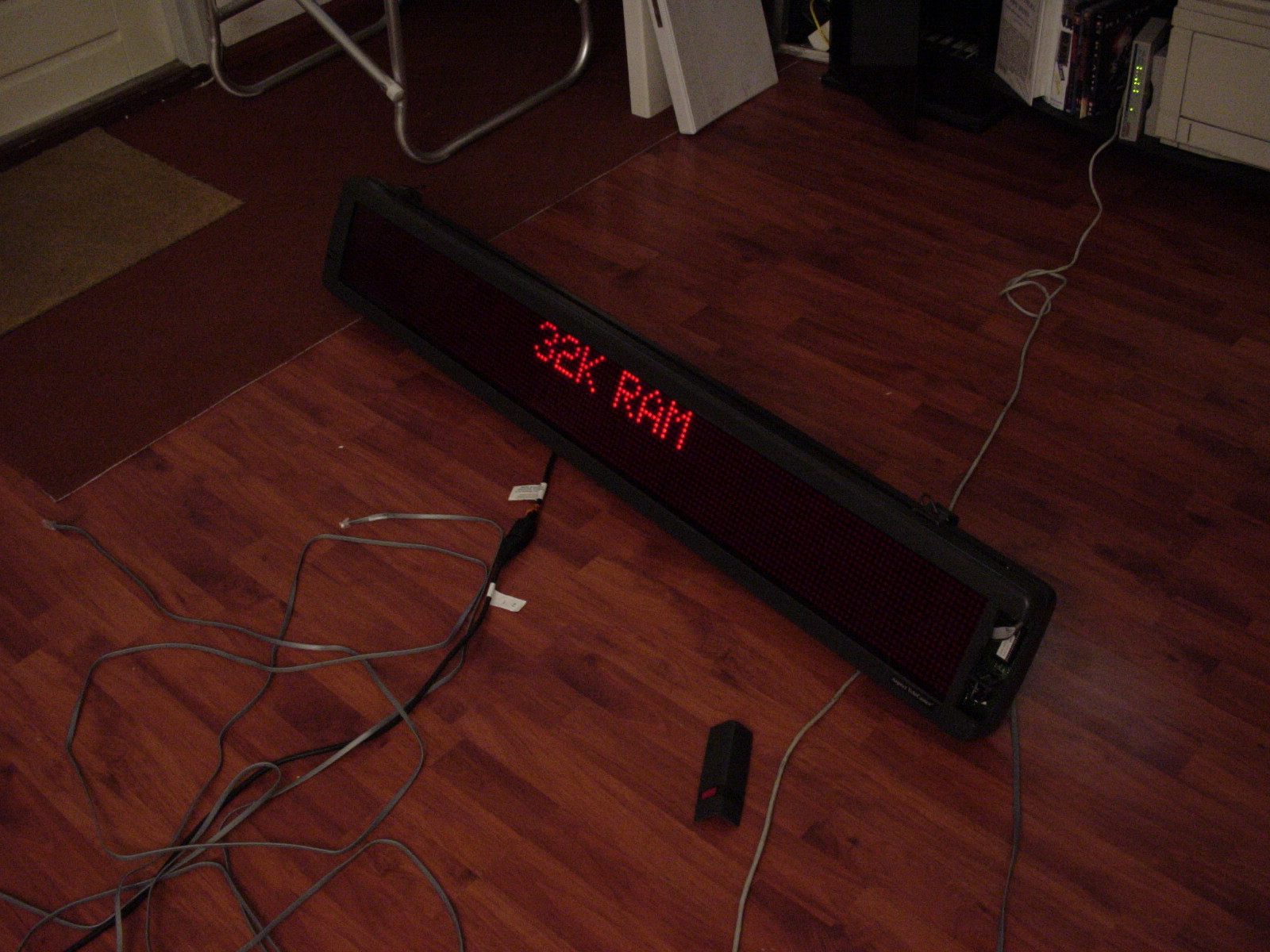
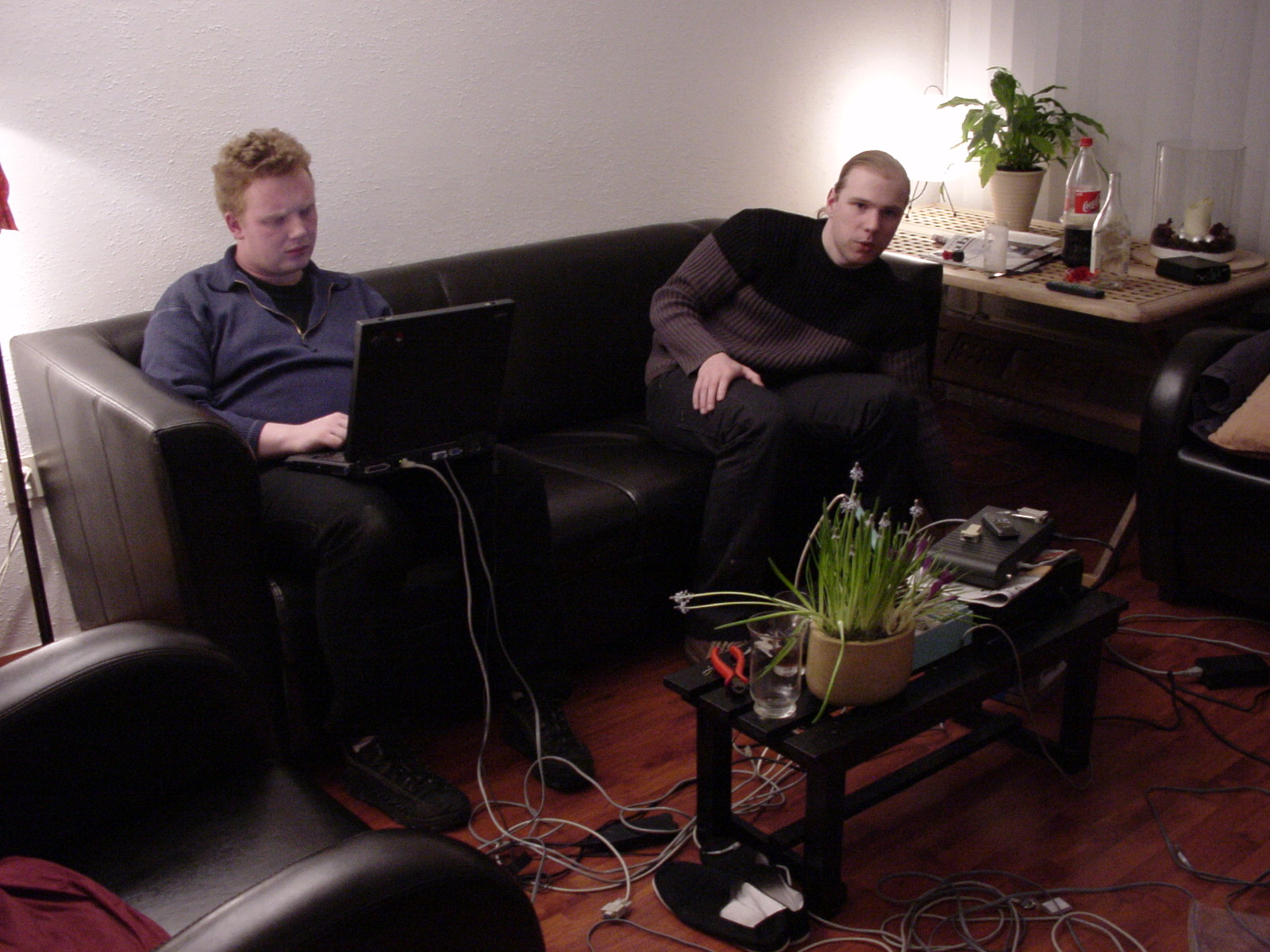
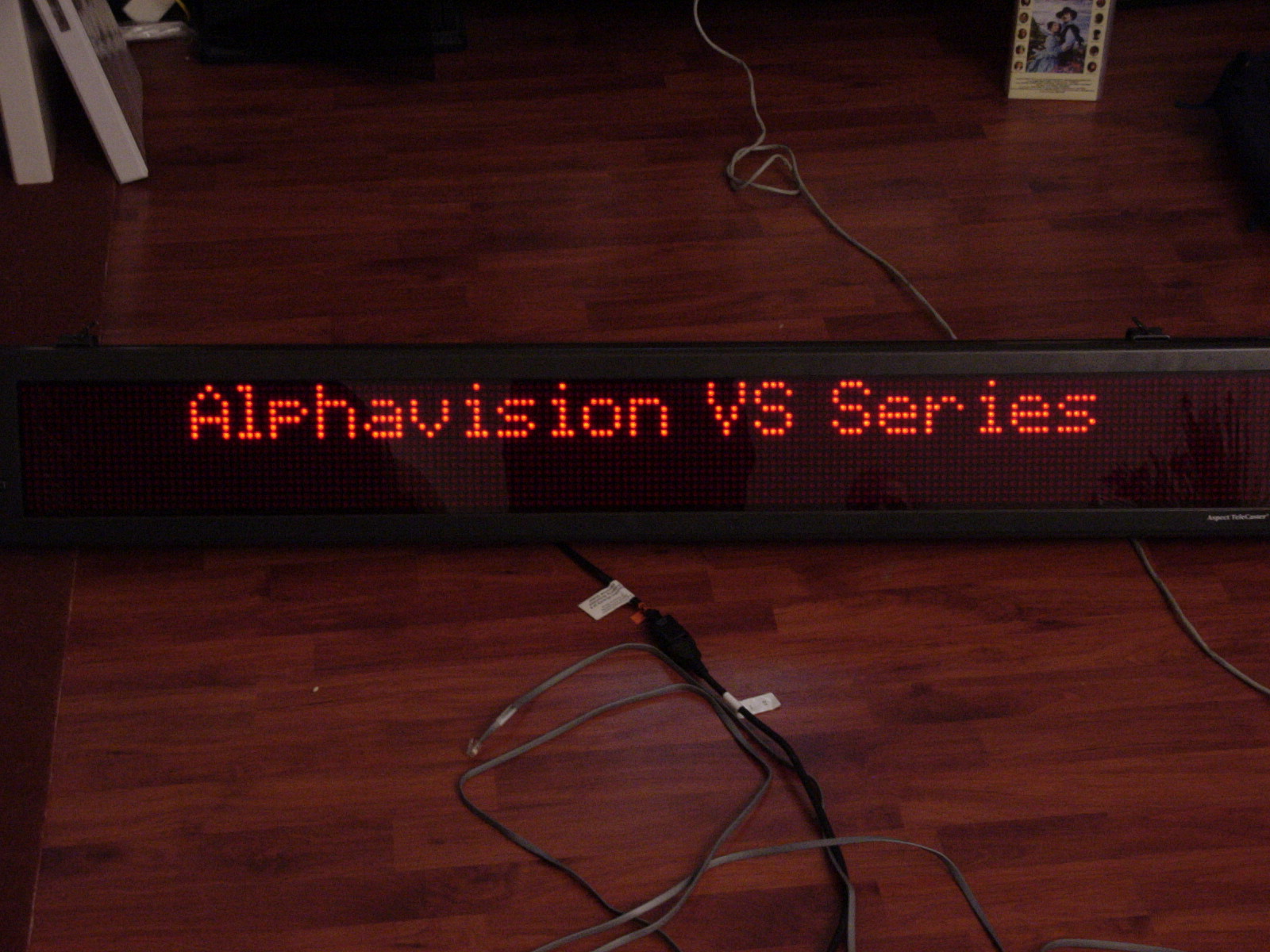
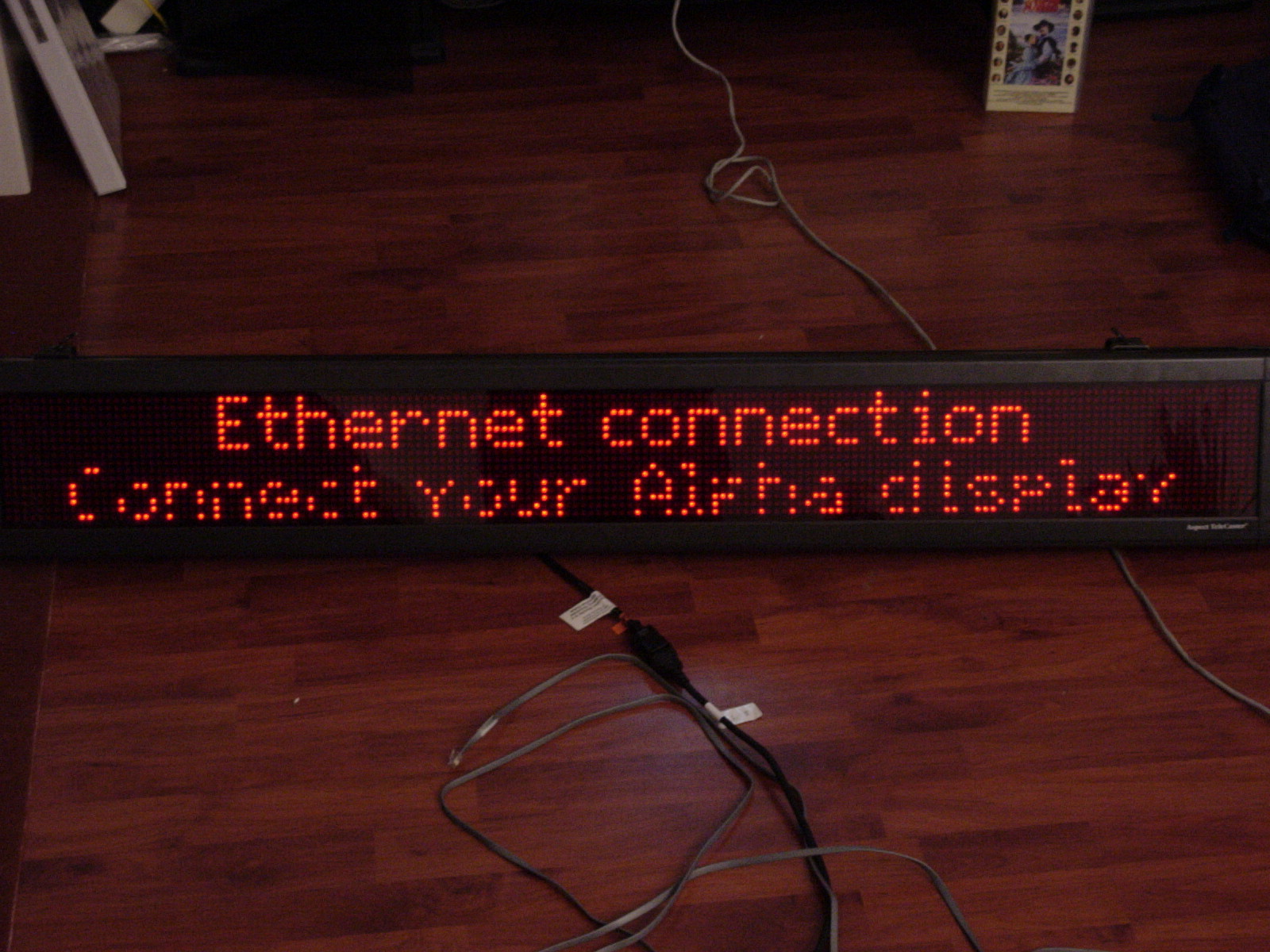
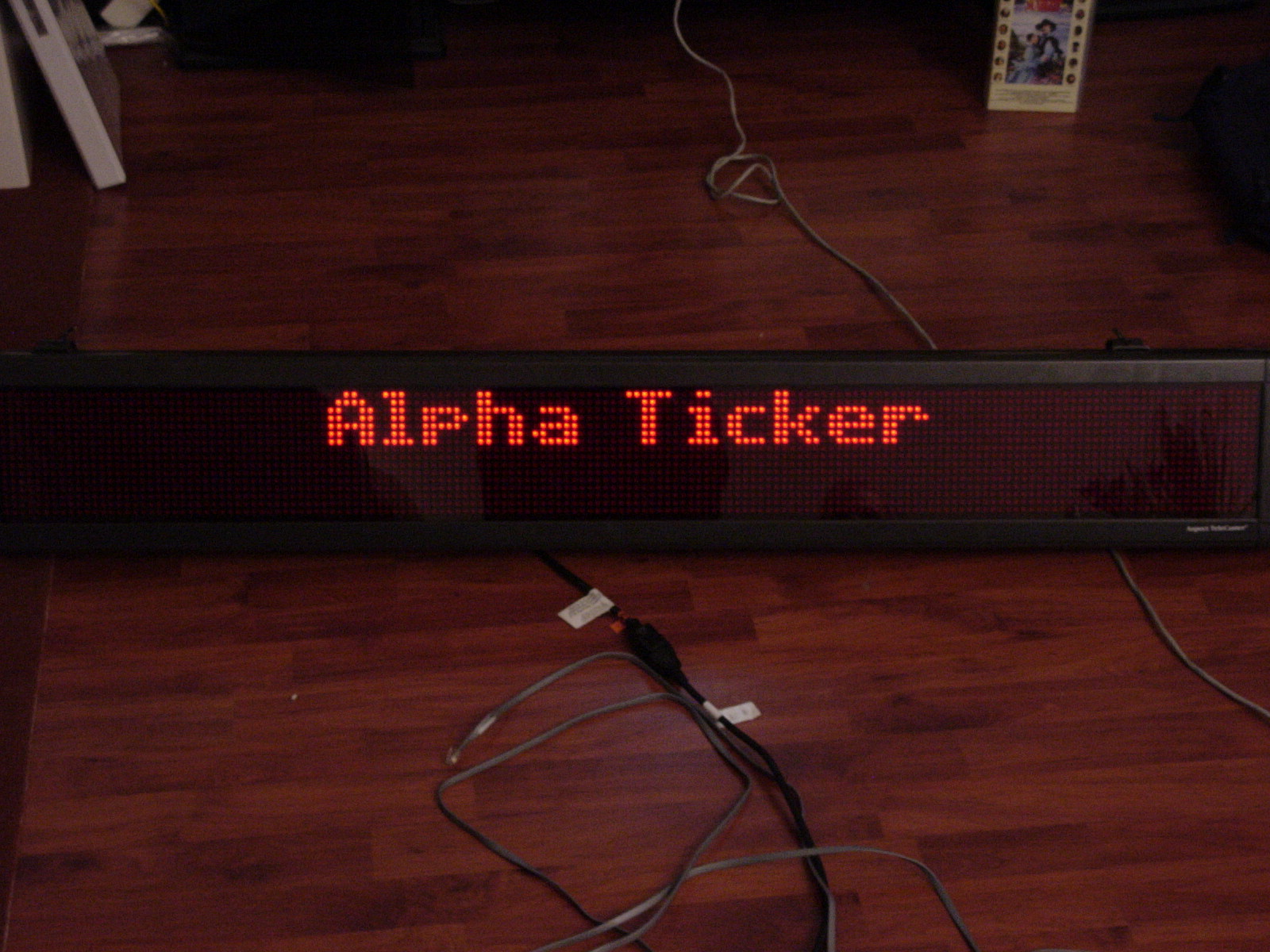
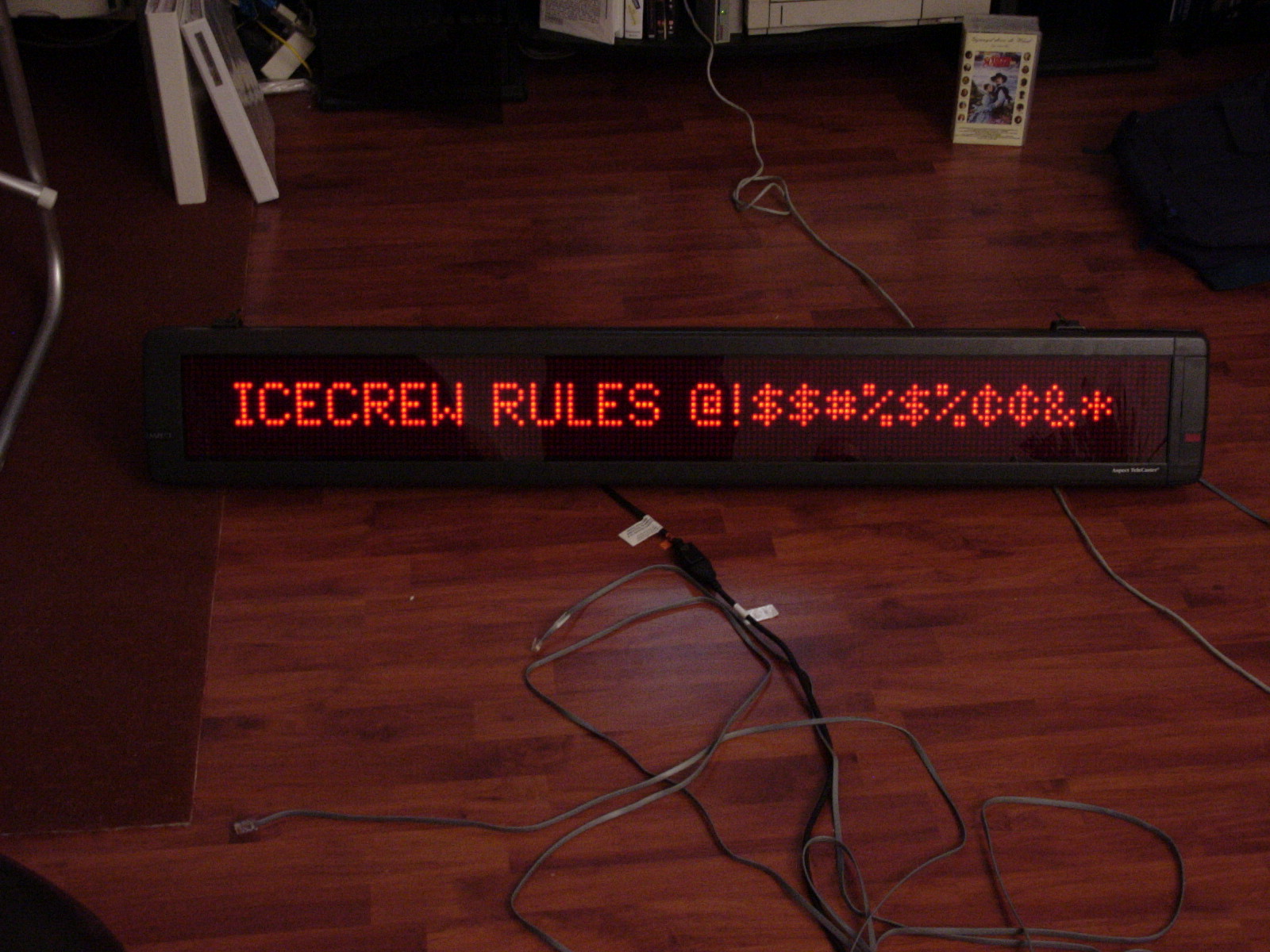
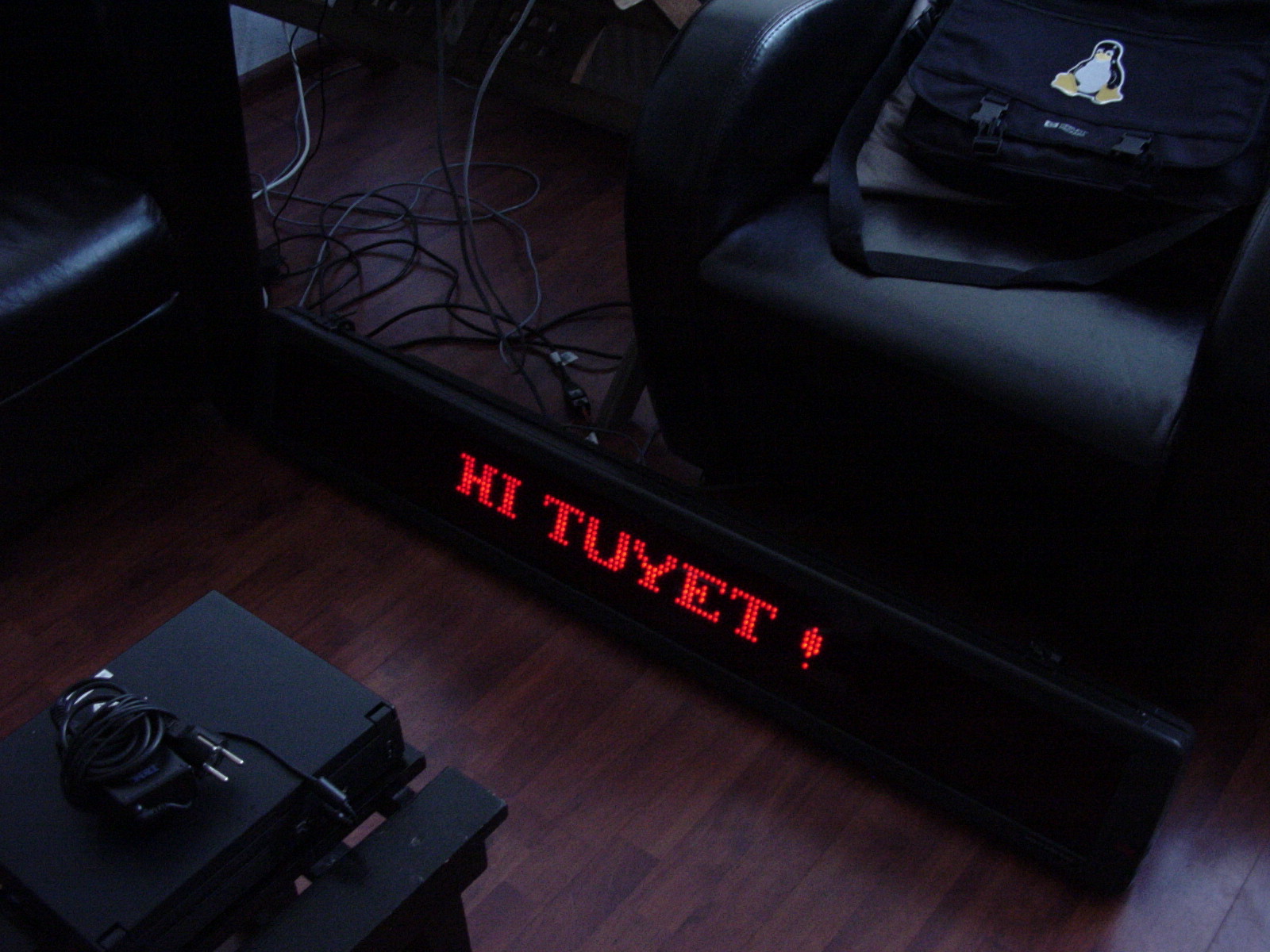
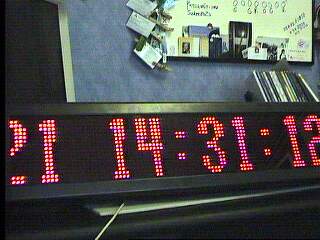
Cobra from the Icecrew got his hands on some Led scrollers.
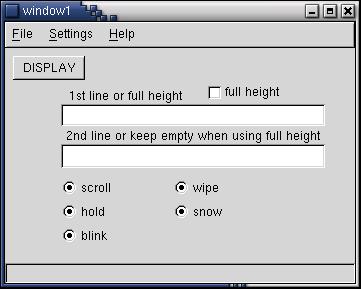
But they only had a windows program to controll these, so we started some reverse-engineering.
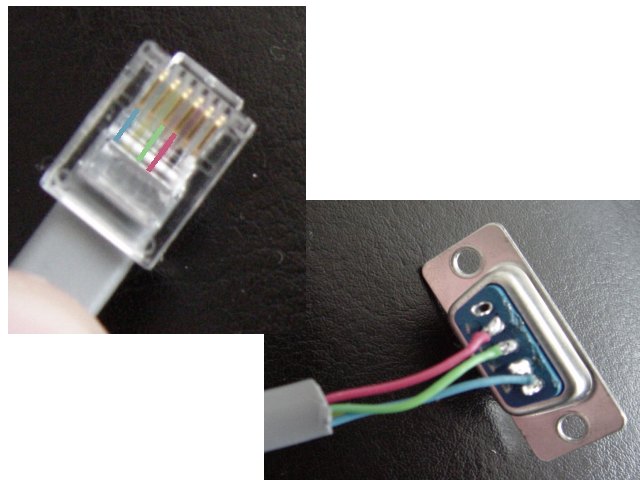
First we had to make a serial cable. (Now we could easily use a logic analyser with protocol decoding)
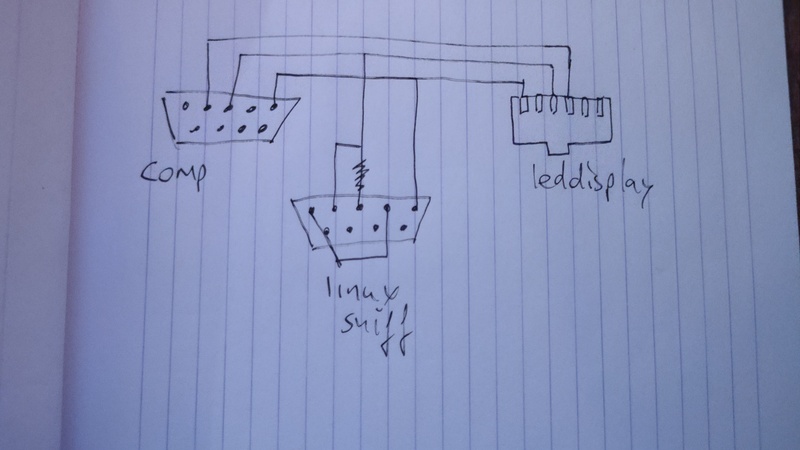
Next i made a sniffer .. because we only had a windows program to control the display. So we used a windows machine to control the display by serial, and using a read line to a linux machine to stiff the serial traffic
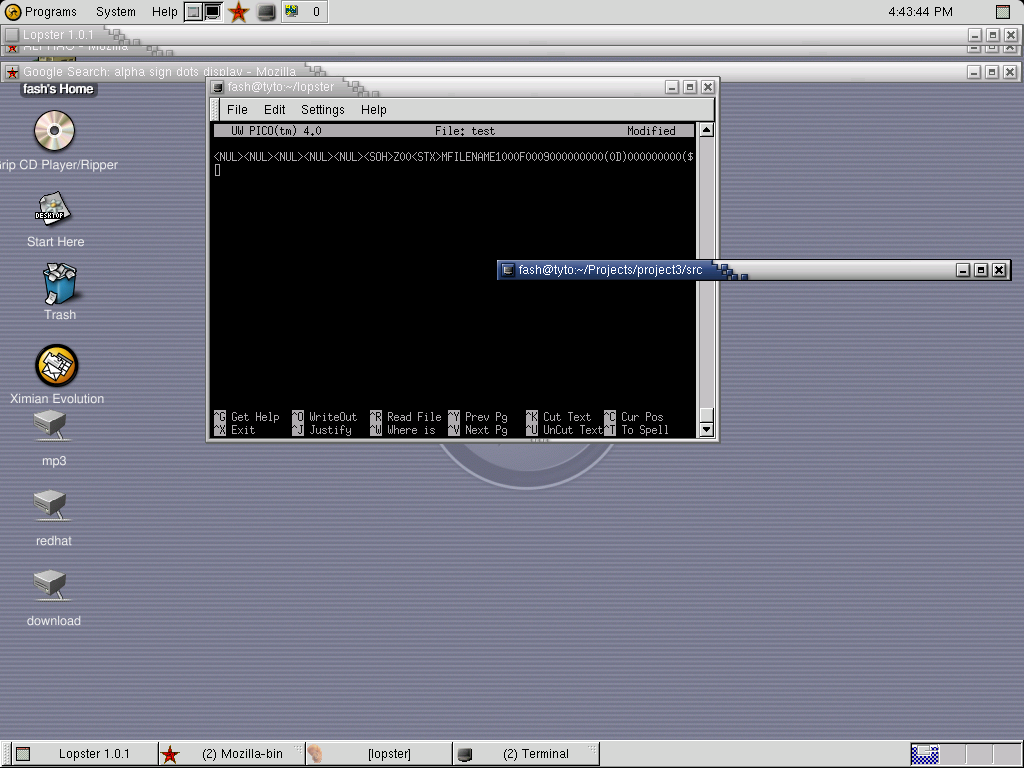
After some tinkering .. we got this
So we wrote some software to control it using Linux
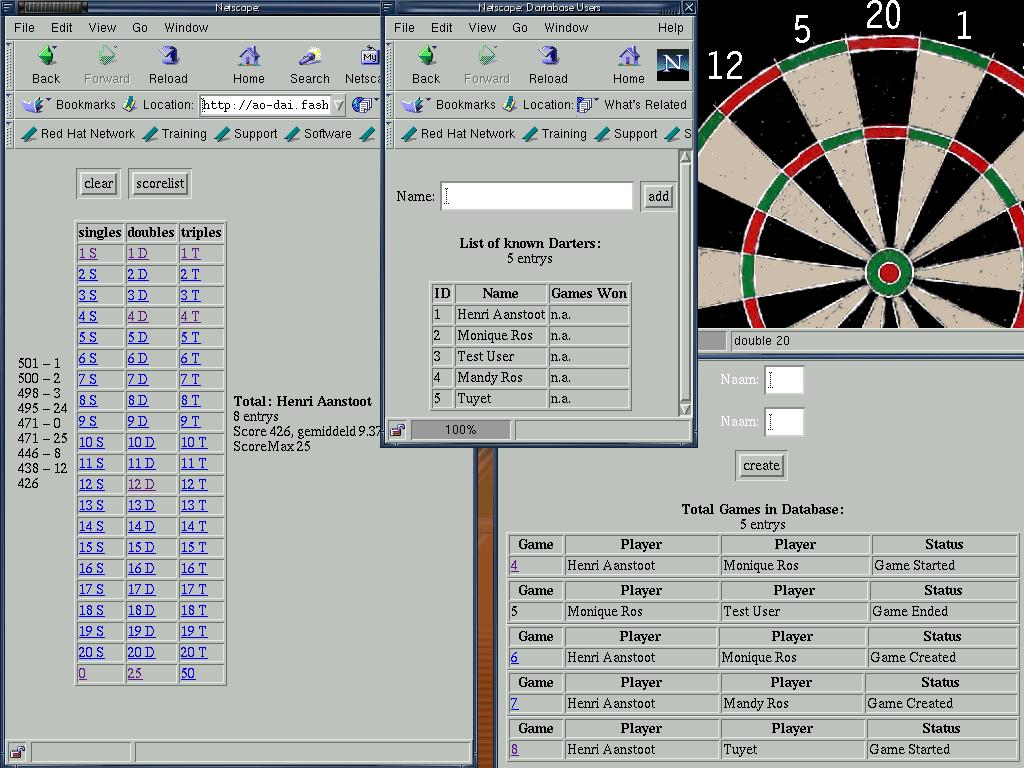
Somewhere start 2002, i made a tool for playing darts. Well … keeping score and history
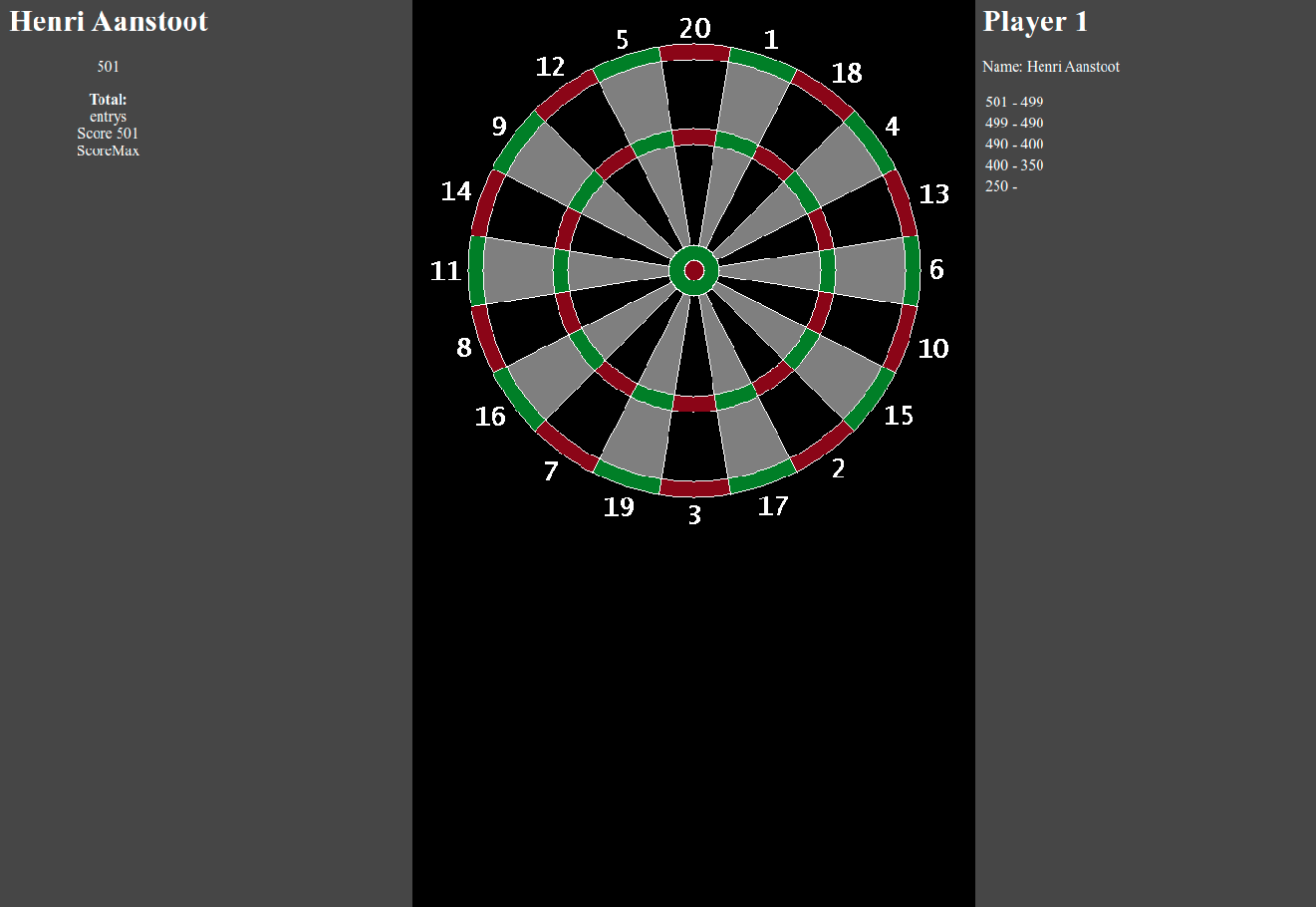
I was multiuser, multigame with statistics and undo. You could click on the little dartboard what your have thrown on a real board. It just kept score and told you best finish options.
Screenshot below was a digitized picture, no way accurate. Versions later the board was realtime drawn with GDlib and pixelperfect. It even showed you previous throws.
At the end of the game it should give you the hotspots you have thrown.
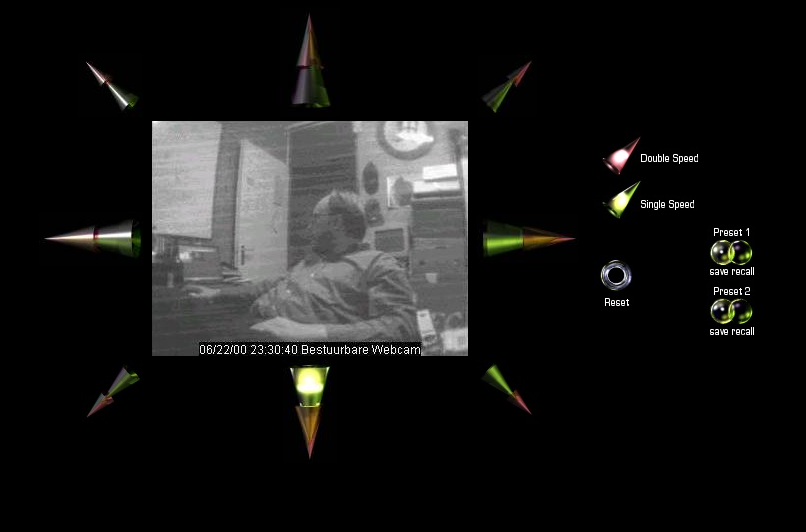
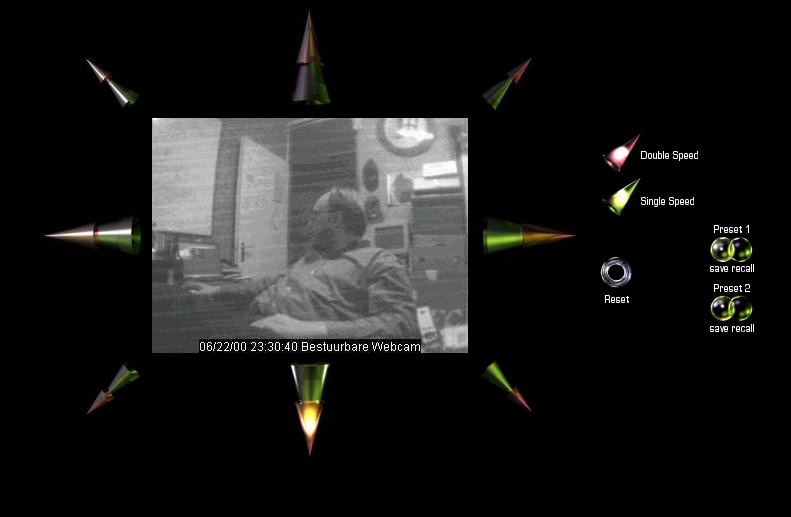
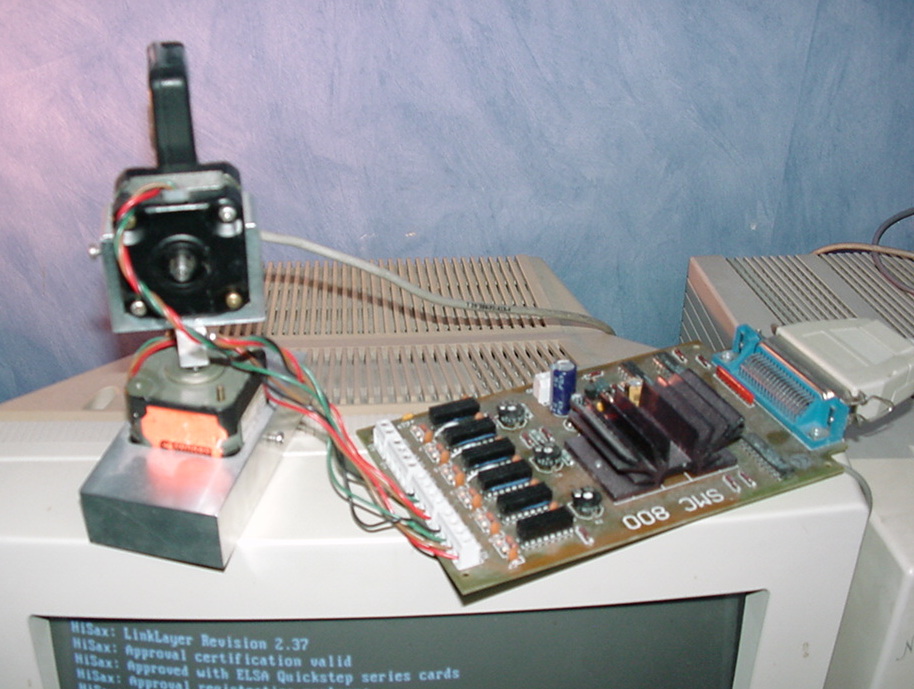
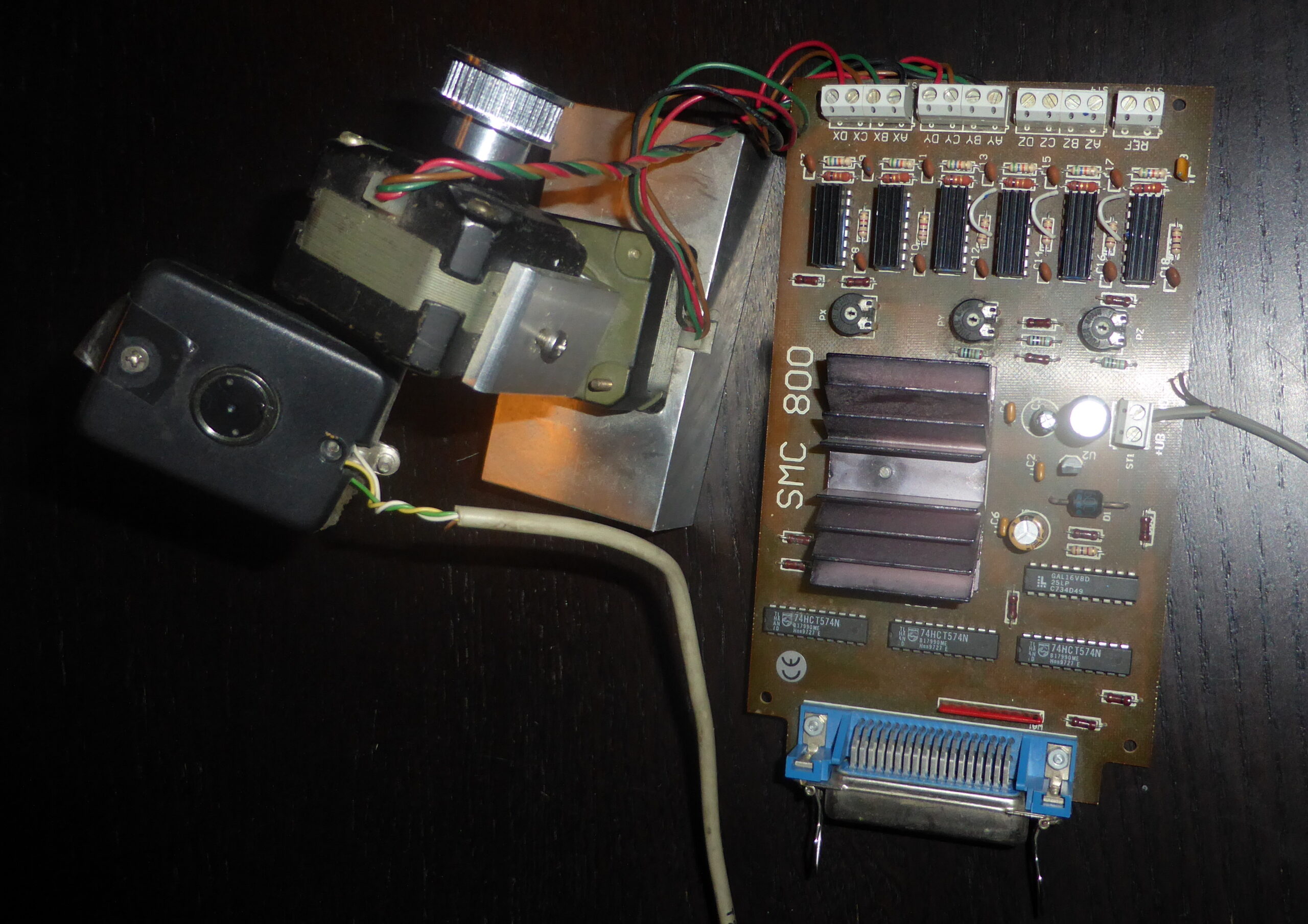
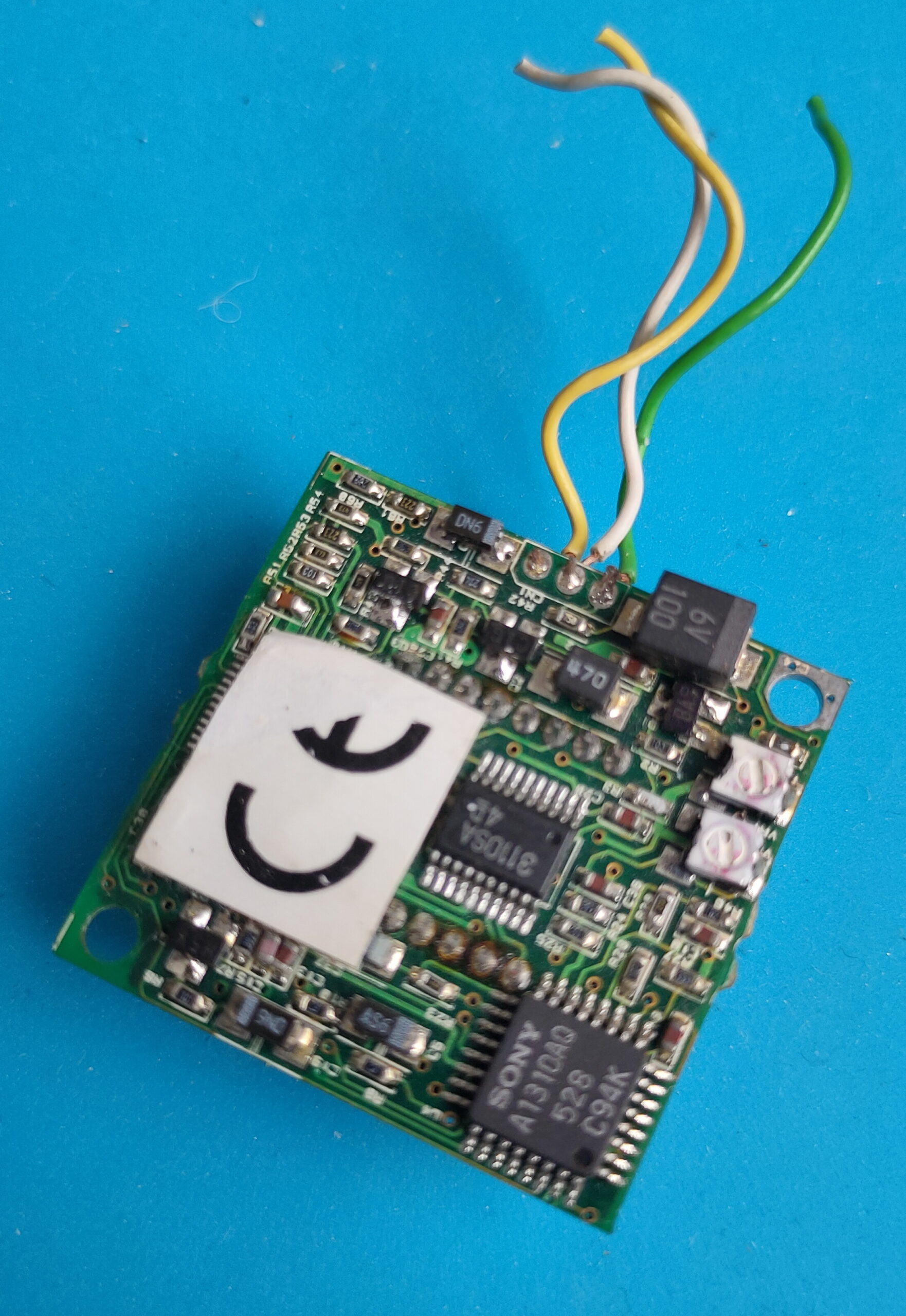
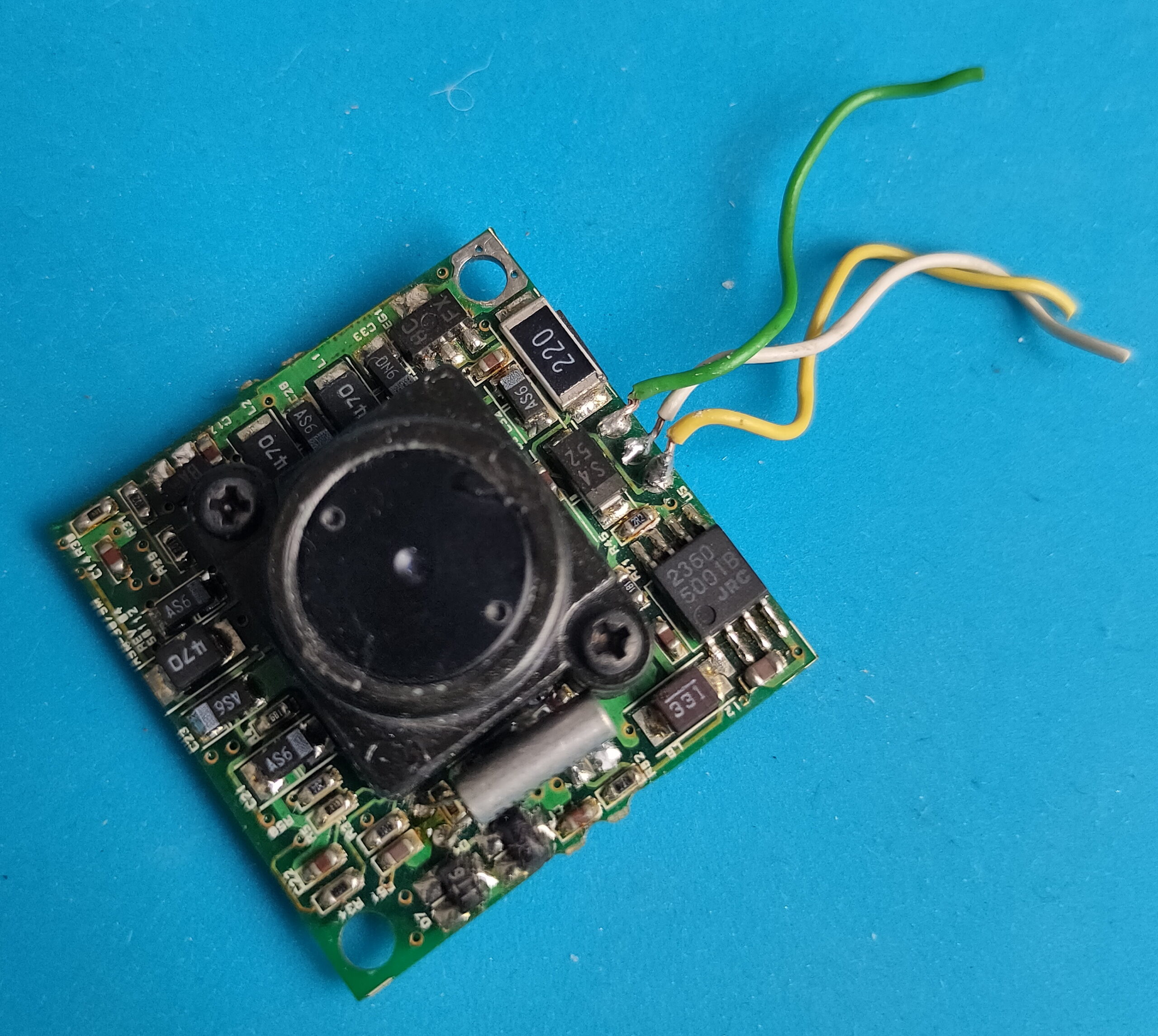
Using a steppermotor controller with two motors. A video capturing device (videoblaster) and a mini B/W camera.
Web interface with glassbuttons effects which i rendered using Bryce.
Up/down/left/right and diagonal
Red double speed green single speed
Reset view
2 Presets with save and recall
Setup with parallel cable
Written software in html and some CGI scripts. Perl and C.
#include <asm/io.h>

# C Code for moving left

int main(int agrc,char agrv[])
{
  int i,wachten;
  int richting1[8]={0x27,0x2d,0x1c,0x0d,0x03,0x09,0x38,0x29};
  int richting2[8]={0x29,0x38,0x09,0x03,0x0d,0x1c,0x2d,0x27};
  ioperm(0x378,3,1);
  ioperm(0x37a,3,1);
  wachten=100;


for (i=0; i<=7; i=i+1)
        {
        outb(richting2[i], 0x378);
        outb(1, 0x37a);
        usleep(wachten);
        outb(0, 0x37a);
        usleep(wachten);
        outb(1, 0x37a);
        usleep(wachten);
        }

 return(0);
}
#!/usr/bin/perl
# Perl CGI script

# Uses 204 no content trick to stay on same page
use LWP::Simple;
my $img = get ('http://10.1.0.1/cgi-bin/left.cgi');
print "Status: 204 No content\n\n";
Streaming video was done using progressive JPG push. Later i used the capturing command in the loop below.
#!/bin/sh

# push jpg, and update after 1sec
# output mime header

echo Content-type: multipart/x-mixed-replace;boundary=--WebcamRules\n
echo
echo --WebcamRules

# create stream

while true; do
   echo Content-type: image/jpeg
   echo
   cat /var/lib/httpd/htdocs/webcam.jpg
   echo
   echo --WebcamRules

   sleep 1
done
This year i’ve been really into assembly on Intel x86 machines. With EDK we made some demo’s and generally trying to find the limits of the machines we had.
Funny story, edk made a program which changed the palette every scanline (if memory serves me right), while running the program and looking at the screen the colors faded to grayscale. (Something with run-away tables) We look at eachother and said: We must have been using up all colors, we need to refill the graphics card.
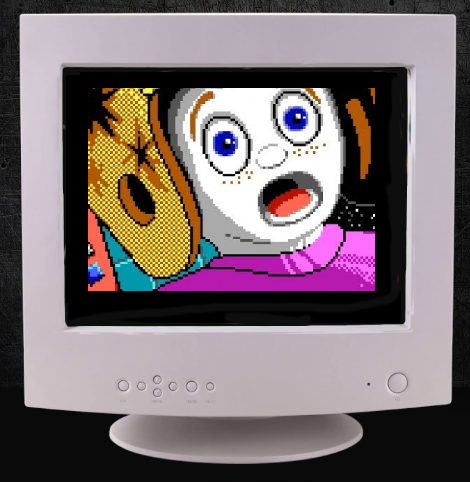
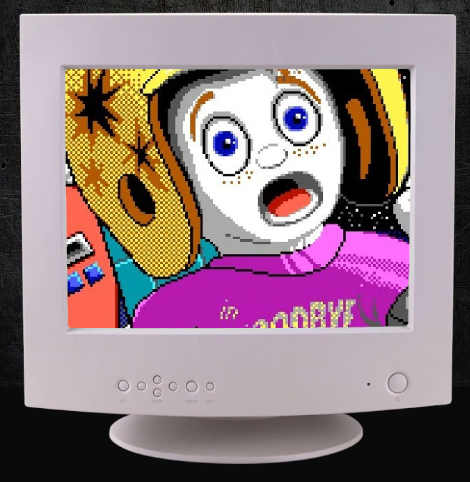
I previously made a copperbar alike thingy on a hercules system. (Have not seen them before on a pc back then ) But with below program, i could display pictures which removed the borders.
Below a nsfw video example (pass protected), but a simplified example in pictures below that.
Test image i’ve used on a 320×200 screen resolution
    name split_screen
.286

parm_vert equ 0

data segment
intmsk      db ?
oldvidtab   db 18h dup (?)      ;actuele video-parameters
newvidtab   label byte
            ;HORIZONTAAL
            db 0
            db 12
            db 12
            db 0
            ;VERTIKAAL
            db 0
            db 5
            db 5
            db 0;-40
            ;
            db 0
            db 0
            db 0
            db 0
            db 0
            db 0
            db 0
            db 0
            db 0
            db 0
            db 0
            ;       REGISTER 13H (OFFSET)
            db 0
            ;
            db 18h dup (0)
data ends

stack segment stack
    dw 128 dup (?)
stack ends

code    segment
        assume cs:code,ds:data
cols label byte
set_scrparms:
    mov dx,3d4h
    mov al,11h
    out dx,al
    inc dx
    in al,dx
    and al,7fh  ;clear bit 7: enable writes to vga reg 0..7
    out dx,al
    dec dx
    mov al,13h      ;offset register
    out dx,al
    inc dx
    in al,dx        ;get actual value
    add al,4
    out dx,al
    ret
;
; RE-INIT DISPLAY ROUTINE
;
get_oldvidparms:
    mov dx,3d4h
    mov cx,18h  ;18h registers
    mov di,offset oldvidtab
    mov bl,0    ;begin met register 0
govp1:
    mov al,bl   ;register index
    out dx,al
    inc dx      ;3d5
    in al,dx    ;get actual register content
    dec dx
    mov [di],al
    inc di
    inc bl      ;volgend register
    loop govp1

    mov si,offset oldvidtab
    mov di,offset newvidtab
    mov cx,18h
donewparms:
    mov al,[si]
    add al,[di]
    mov [di],al
    inc si
    inc di
    loop donewparms
    ret
set_newvidparms:
    mov dx,3d4h
    mov cx,18h  ;18h registers
    mov si,offset newvidtab
    mov bl,0    ;begin met register 0
snvp1:
    mov al,bl   ;register index
    out dx,al
    inc dx      ;3d5
    mov al,[si]
    inc si
    out dx,al   ;set register value
    dec dx
    inc bl      ;volgend register
    loop snvp1
    ret

;
; MAIN ENTRY POINT
;
init:
    mov ax,data
    mov ds,ax
    in al,21h
    mov intmsk,al
    cli
    mov al,11111101b
    out 21h,al
    sti
    mov ax,13h
    int 10h
;extend video-memory to 256kb or more
    mov dx,3ceh
    mov al,06h
    out dx,al
    inc dx
    in al,dx
    and al,0f3h
    out dx,al
    ;
    mov ax,0a000h
    mov es,ax
    call set_scrparms
    call get_oldvidparms
    call set_newvidparms
    mov dx,3cch
    in al,dx
    and al,03fh
    mov ah,parm_vert
    ror ah,2
    or al,ah
    mov dx,3c2h
    out dx,al
;
    ;
    push ds
    mov ax,5000h
    mov ds,ax
;
; pallet
;

setpal:
    mov dx,3c8h
    xor al,al
    out dx,al
    inc dx
    mov cx,256*3
    mov si,100h
    cld
    rep outsb
;disp picture routine
    mov ax,6000h
    mov ds,ax
    mov si,0
    mov di,0
    mov ax,0
    mov cx,352*8
    cld
    rep stosw
    mov si,di
    mov cx,8
    cld
    rep stosw
    mov bp,170
    mov si,di
 hiero:
    mov cx,320
    cld
    rep movsb
    mov ax,0
    mov cx,16
    cld
    rep stosw
    mov si,di
    dec bp
    jnz hiero


    xor si,si
    xor di,di
    mov ax,0b000h
    mov es,ax
    mov ax,07000h
    mov ds,ax
    mov cx,3000
    cld
    mov ax,0
    rep stosw
    mov ax,0a000h
    mov es,ax

    mov ax,6000h
    mov ds,ax
    mov di,0
    mov si,di
rhiero:
    push ax
    mov ah,8
    int 21h
    pop ax
    std
    mov cx,-1
    rep movsb


    xor si,si
    xor di,di
    mov ax,0b000h
    mov es,ax
    mov ax,07000h
    mov ds,ax
    mov cx,3000
    cld
    rep movsw
    mov ax,0a000h
    mov es,ax
    pop ds
    ;
mloop:
    mov dx,3dah
wtv1:
    in al,dx
    test al,8
    jnz wtv1
wtv2:
    in al,dx
    test al,8
    jz  wtv2
    mov ah,1
    int 16h
    jz mloop
    xor ah,ah
    int 16h
exit:
    mov ax,3
    int 10h
    cli
    mov al,intmsk
    out 21h,al
    sti
    mov ax,4c00h
    int 21h

code ends
end init
I think i started programming in assembly on PC around 1992. I learned a lot from my friend Edk. Who was a assembly wizard just like Sepp. Reverse engineering routines, writing emulators etc.
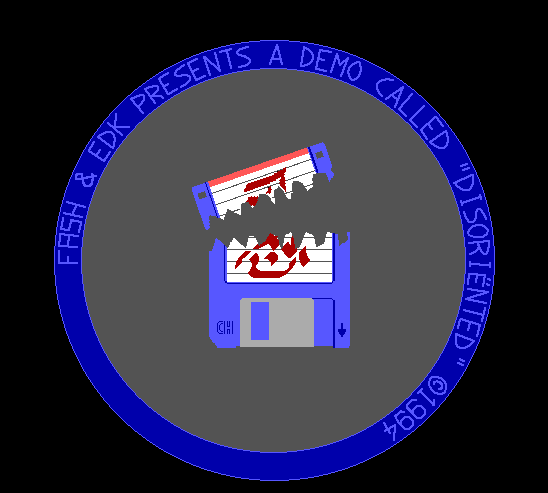
We made several demo’s like the one below. It must have been around 1994.
Dos emulator running our demo from 1994
Just after this one, we started a demo which could run from a 5.25″ boot disk. No dos operating system. When starting your pc, booting from a floppy you would get a starfield, with some text (from a bootsector) ,after that it would load the next sectors, wich contained the rest of the demo. Due to directly programming soundcard and graphics card, this was hard to pull off on different kinds of hardware.
Demo gfx
Example of assembly code for a effect.
    NAME plasma

.model small
.386
.data
colshades   db +001h, 001h,+001h
            db -001h,-001h,-000h
            db +000h,-000h,-001h
            db -000h,-000h,+000h
rgb_cols    db 256*3 dup (?)
cosptr dw 0
sinptr dw 30

.code
demo        proc near

show proc near
    xor di,di
    mov bp,200
show1:
    mov cx,320
    mov si,0
    mov dx,0
show0:
;    push ds
;    mov ax,7000h
;    mov ds,ax
;    lodsb
;    pop ds
    call getsincos
    add cosptr,1
    stosb
    loop show0
;    add dx,1
    add sinptr,1
    dec bp
    jnz show1
    ret
show endp

effect proc near
;   add cosptr,1
;    add sinptr,0
    ret
effect endp

getsincos proc near
    push di
    push ds
    mov si,cosptr
    mov di,sinptr
    mov ax,7000h
    mov ds,ax
    lodsb           ;get cos value
    cmp si,320      ;einde costab?
    jb cosok
    xor si,si
    lodsb
cosok:
    mov ah,al
    xchg si,di
    lodsb           ;get cos value
    cmp si,320      ;einde costab?
    jb sinok
    xor si,si
    lodsb
sinok:
    xchg si,di
    pop ds
    mov cosptr,si
    mov sinptr,di

    mov dx,0
    mov dl,al
    add dl,ah
    adc dh,0
    shr dx,1
    mov al,dl
;    xor al,ah
;    add al,ah
    pop di
    ret
getsincos endp

setcols proc near
    push    es
    push    ds
    pop     es
    mov     di,offset rgb_cols
    mov     si,offset colshades
    mov     dl,0    ;start with black
    mov     bh,0
    mov     bl,0
    mov     bp,4
set_rgball:
    mov     cx,64-1
set_rgb:
    mov     al,dl
    stosb
    mov     al,bh
    stosb
    mov     al,bl
    stosb
    mov     al,[si]
    add     dl,al
    mov     al,[si+1]
    add     bh,al
    mov     al,[si+2]
    add     bl,al
    loop    set_rgb
    add     si,3
    dec     bp
    jnz     set_rgball
    pop     es
    ret
setcols endp

setrgb proc near
    mov dx,3c8h
    xor al,al       ;start with colour 00h
    out dx,al
    inc dx
    mov si,offset rgb_cols
    mov cx,256*3
    rep outsb       ;set 256 RGB values
    ret
setrgb endp

wvtr proc near
    mov dx,3dah
wtv:
    in al,dx
    test al,8
    jz wtv
    ret
wvtr endp

start:
    cld
    mov ax,@data
    mov ds,ax
    mov ax,0a000h
    mov es,ax
    mov ax,13h
    int 10h         ;screen 320x200 256 colours
    call setcols
    call setrgb
    call show
    mov al,11111101b
    out 21h,al      ;disable int
mloop:
    call wvtr
;    call show
    call effect
    mov ah,1
    int 16h
    jz mloop
    xor ah,ah
    int 16h
exit:
    xor al,al
    out 21h,al      ;enable int
    mov ax,3
    int 10h         ;screen  80x25 text
    mov ax,4c00h
    int 21h         ;back to DOS
demo        endp

end start
"If something is worth doing, it's worth overdoing."