Combining a GPS module, compass, a LED ring and some code, I want to make a little device which shows you the way to the nearest … something.
To make it completely standalone, I have to use a SIM module. (Same as I have used before) This POC will use my phone as hotspot.
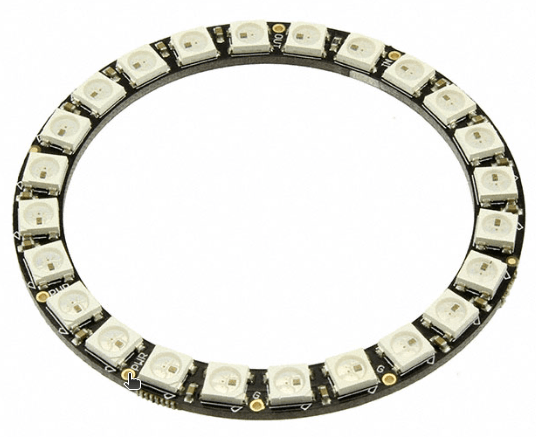
The LED ring will show the direction to go.
Edit: Maybe not a LED ring but a little display.
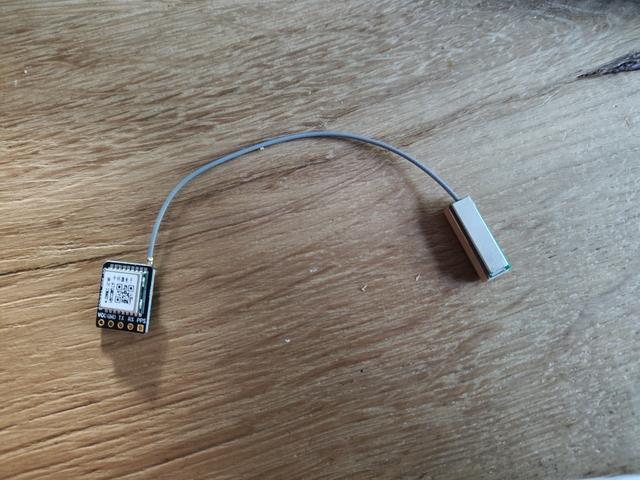
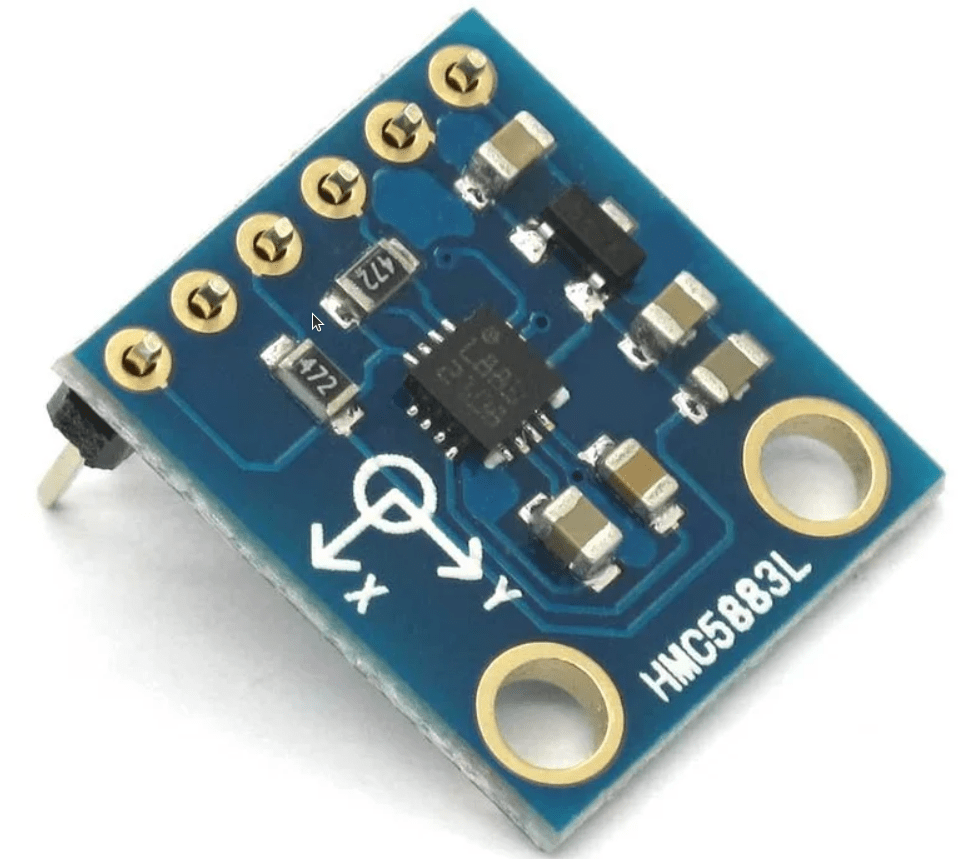
GPS moduleCompass moduleLedring
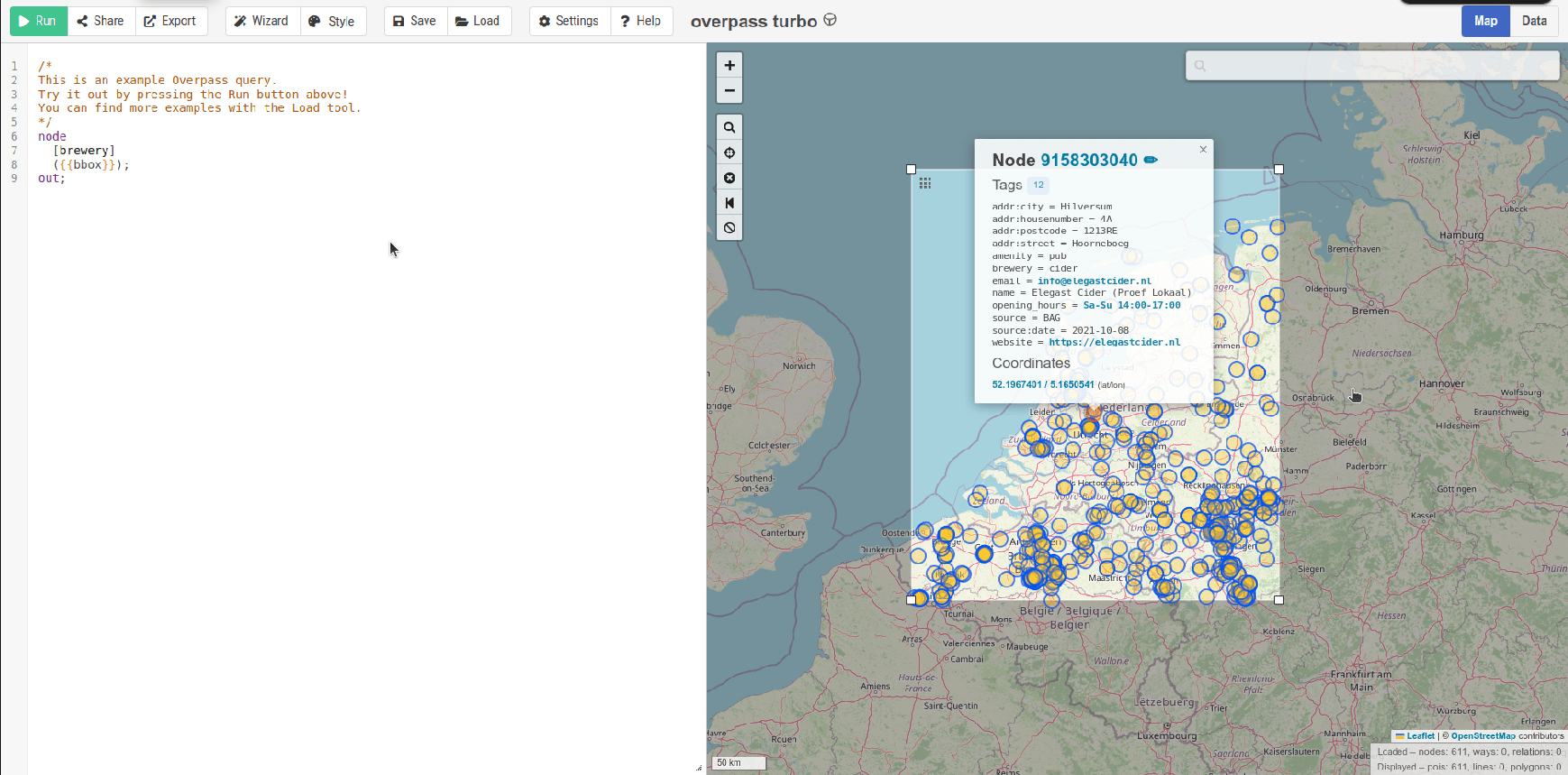
As previously posted, I was playing with Overpass turbo. Using an API, I can use code to query this.
Arduino sends latitude, longitude to my webserver
Webserver queries API for neastest POIs and calculates distance.
Send data from webserver to arduino
Arduino uses heading data to light up direction LED (also on secondary display with distance info?) edit: and shop info
Test code for my web server to query the data
import overpy
import math

api = overpy.Overpass()

# This location will be filled with data from GPS module on Arduino.
latitude = 52.2270745        # Center latitude (e.g. Berlin)
longitude = 5.177519      # Center longitude
box_size = 0.05         # Box size in degrees (about ~5 km)

south = latitude - box_size
north = latitude + box_size
west = longitude - box_size
east = longitude + box_size

def haversine(lat1, lon1, lat2, lon2):
    R = 6371  # Earth radius in km
    phi1 = math.radians(lat1)
    phi2 = math.radians(lat2)
    d_phi = math.radians(lat2 - lat1)
    d_lambda = math.radians(lon2 - lon1)

    a = math.sin(d_phi / 2)**2 + math.cos(phi1) * math.cos(phi2) * math.sin(d_lambda / 2)**2
    c = 2 * math.atan2(math.sqrt(a), math.sqrt(1 - a))

    return R * c  # Distance in kilometers

# Calculate bearing in degrees (0-360)
def bearing(lat1, lon1, lat2, lon2):
    phi1 = math.radians(lat1)
    phi2 = math.radians(lat2)
    delta_lon = math.radians(lon2 - lon1)

    x = math.sin(delta_lon) * math.cos(phi2)
    y = math.cos(phi1) * math.sin(phi2) - math.sin(phi1) * math.cos(phi2) * math.cos(delta_lon)

    initial_bearing = math.atan2(x, y)
    compass_bearing = (math.degrees(initial_bearing) + 360) % 360  # Normalize to 0–360

    return compass_bearing

# Overpass QL query
query = f"""
[out:json];
node
  ["shop"="alcohol"]
  ({south}, {west}, {north}, {east});
out body;
>;
out skel qt;
"""

try:
    result = api.query(query)

    # Collect and sort places by distance
    places = []
    for node in result.nodes:
        node_lat = float(node.lat)
        node_lon = float(node.lon)
        distance = haversine(latitude, longitude, node_lat, node_lon)
        direction = bearing(latitude, longitude, node_lat, node_lon)
        name = node.tags.get("name", "Unnamed")
        places.append((distance, direction, name, node_lat, node_lon))

    places.sort()

    print(f"Found {len(places)} alcohol-related places sorted by distance:")
    for dist, dir_deg, name, lat, lon in places:
        print(f"- {name} at ({lat:.5f}, {lon:.5f}) — {dist:.2f} km, {dir_deg:.0f}°")

except Exception as e:
    print(f"Error: {e}")
Output:
Found 10 alcohol-related places sorted by distance:
- The Skiff at (52.22583, 5.17860) — 0.16 km, 152°
- Onzewijnen at (52.22612, 5.17045) — 0.49 km, 258°
- Gall & Gall at (52.23244, 5.19204) — 1.15 km, 59°
- Gall & Gall at (52.21536, 5.16735) — 1.48 km, 208°
- Eric's Beer Craft at (52.21549, 5.16632) — 1.50 km, 211°
- Slijterij at (52.21082, 5.15692) — 2.29 km, 218°
- Gall & Gall at (52.21590, 5.14074) — 2.80 km, 244°
- Gall & Gall at (52.25422, 5.22705) — 4.53 km, 48°
- Gall & Gall at (52.26808, 5.18348) — 4.58 km, 5°
- Il DiVino at (52.27507, 5.16414) — 5.41 km, 350°
Example using Overpass Turbo to find breweries
Other ideas
Geocaching (Thanks Vincent)
Find each other at festivals?
UPDATE
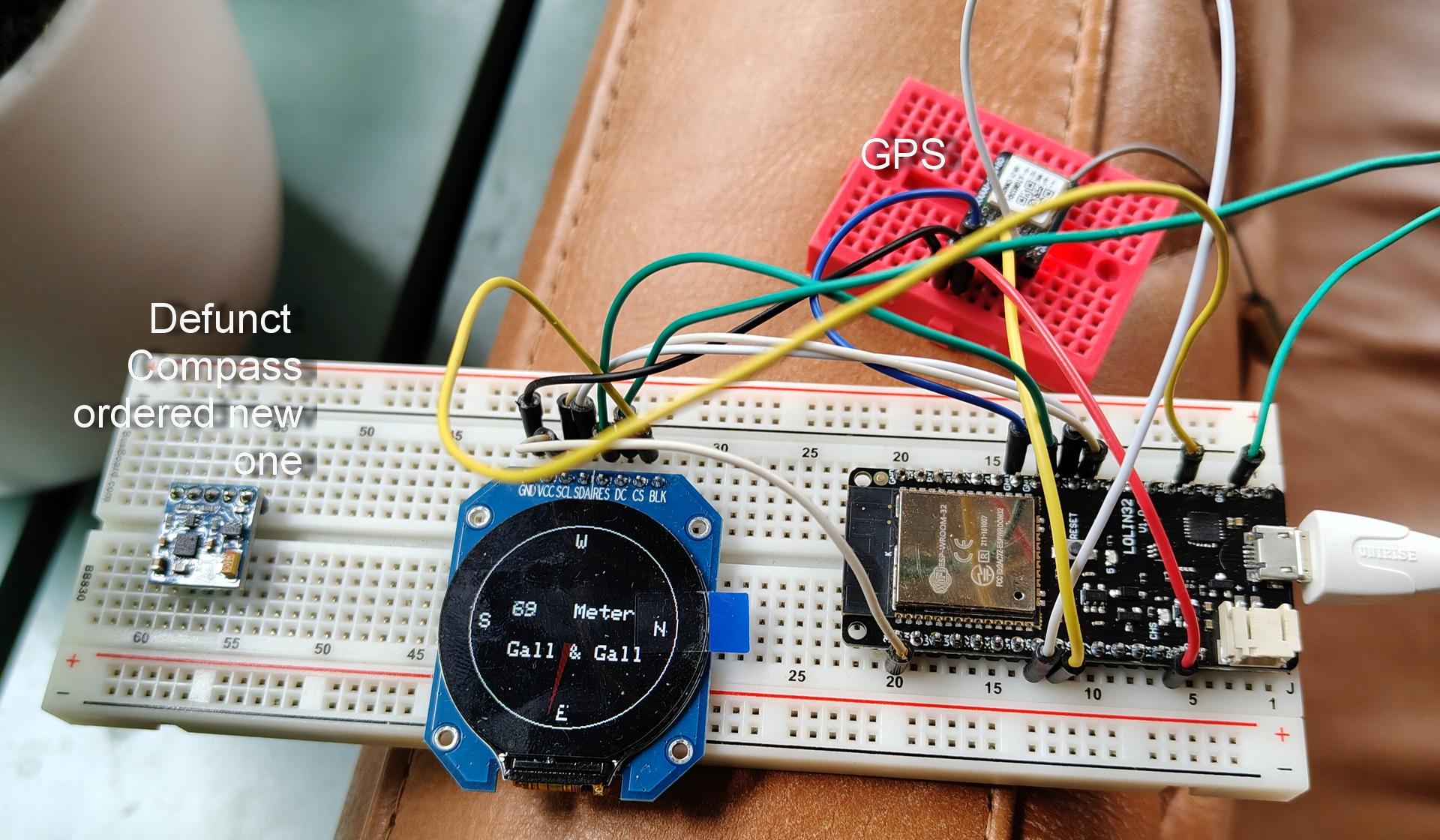
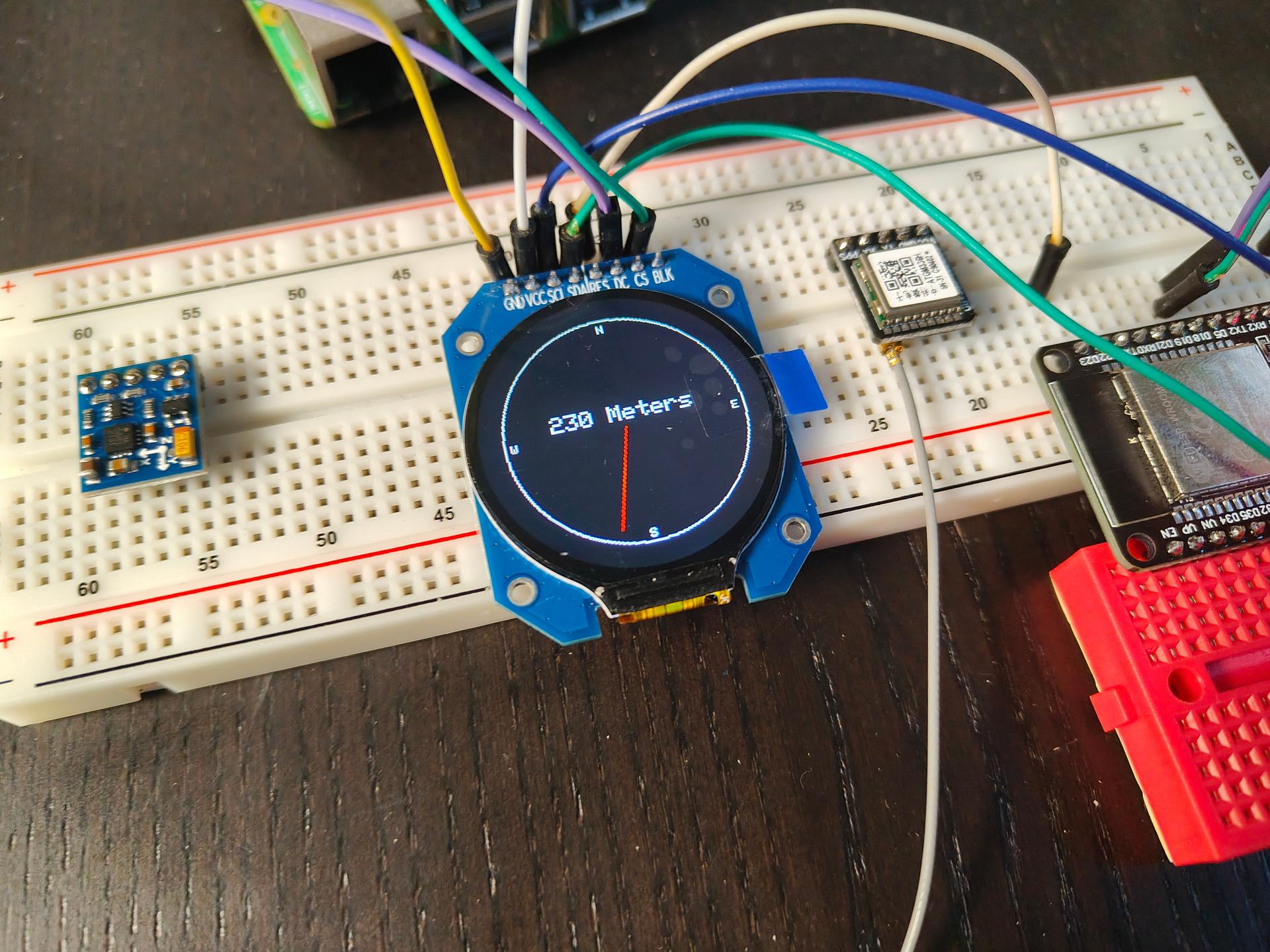
Building the hardware : First design
Screen programming (First setup)
Some test code
#include "SPI.h"
#include "Adafruit_GFX.h"
#include "Adafruit_GC9A01A.h"

// Overrule stuff
#define TFT_CS 18   // Chip select
#define TFT_DC 5    // Data/command mode
#define TFT_BL 4    // Backlight control
#define TFT_MOSI 12 // SPI Out AKA SDA
#define TFT_SCLK 13 // Clock out AKA SCL
#define TFT_MISO -1 // pin not used
#define TFT_RST 23  // Reset ################# IMPORTANT, won't work without!! Took me a hour!

// Need this changed from example also
Adafruit_GC9A01A tft(TFT_CS, TFT_DC,TFT_MOSI,TFT_SCLK,TFT_RST,TFT_MISO);

float angle = 0;

void setup() {
  tft.begin();
  tft.setRotation(0);
  tft.fillScreen(GC9A01A_BLACK);
  drawCompassFace();
}

void loop() {
  drawNeedle(angle, GC9A01A_RED);
  delay(1000);
  drawNeedle(angle, GC9A01A_BLACK);  // Erase previous needle
  angle += 15;
  if (angle >= 360) angle = 0;

  tft.setCursor(60, 100);
  tft.setTextColor(GC9A01A_WHITE);  tft.setTextSize(2);
  tft.println("230 Meters");

}

// Draw static compass face
void drawCompassFace() {
  int cx = tft.width() / 2;
  int cy = tft.height() / 2;
  int radius = 100;

  tft.drawCircle(cx, cy, radius, GC9A01A_WHITE);
  tft.setTextColor(GC9A01A_WHITE);
  tft.setTextSize(1);
  tft.setCursor(cx - 3, cy - radius + 5); tft.print("N");
  tft.setCursor(cx - 3, cy + radius - 10); tft.print("S");
  tft.setCursor(cx - radius + 5, cy - 3); tft.print("W");
  tft.setCursor(cx + radius - 10, cy - 3); tft.print("E");
}

// Draw compass needle
void drawNeedle(float angleDeg, uint16_t color) {
  int cx = tft.width() / 2;
  int cy = tft.height() / 2;
  float angleRad = angleDeg * DEG_TO_RAD;
  int x = cx + cos(angleRad) * 90;
  int y = cy + sin(angleRad) * 90;
  tft.drawLine(cx, cy, x, y, color);
}
"If something is worth doing, it's worth overdoing."