I’ve got a Wifi outside of my network for guest and emergency. ( 2 SSIDs)
Then a main Wifi router in my livingroom, one in my workshop/studio and one in the Attic (Electronics Lab)
So three main Wifi AccessPoints. These all have the same SSID’s but on different frequencies. That way i’ve got roaming in and outside my house. Also some virtual accesspoints are configured. I’ve got a main, folkband, IOT, guest-inside all on 2.4Ghz and 5Ghz.
I watched a lot of YT presentations about Mikrotik Wifi.
So I ended up with DFS safe channels 20Mhz for 2.4 and 20/40Mhz Ce for 5Ghz. (subchannels for each after some frequency scanning) (2.4 does a failback to 20Mhz whenever there is even one client detected which connects only on this band. Such as some old IOT stuff) 2.4 in only 1,6 and 11 no overlap, each on another device. 300Mbps is sufficient for my wifi 🙂
I’ve got accesslists in place and i’m going to read into kicking a client when the signal strenght is below -50dB
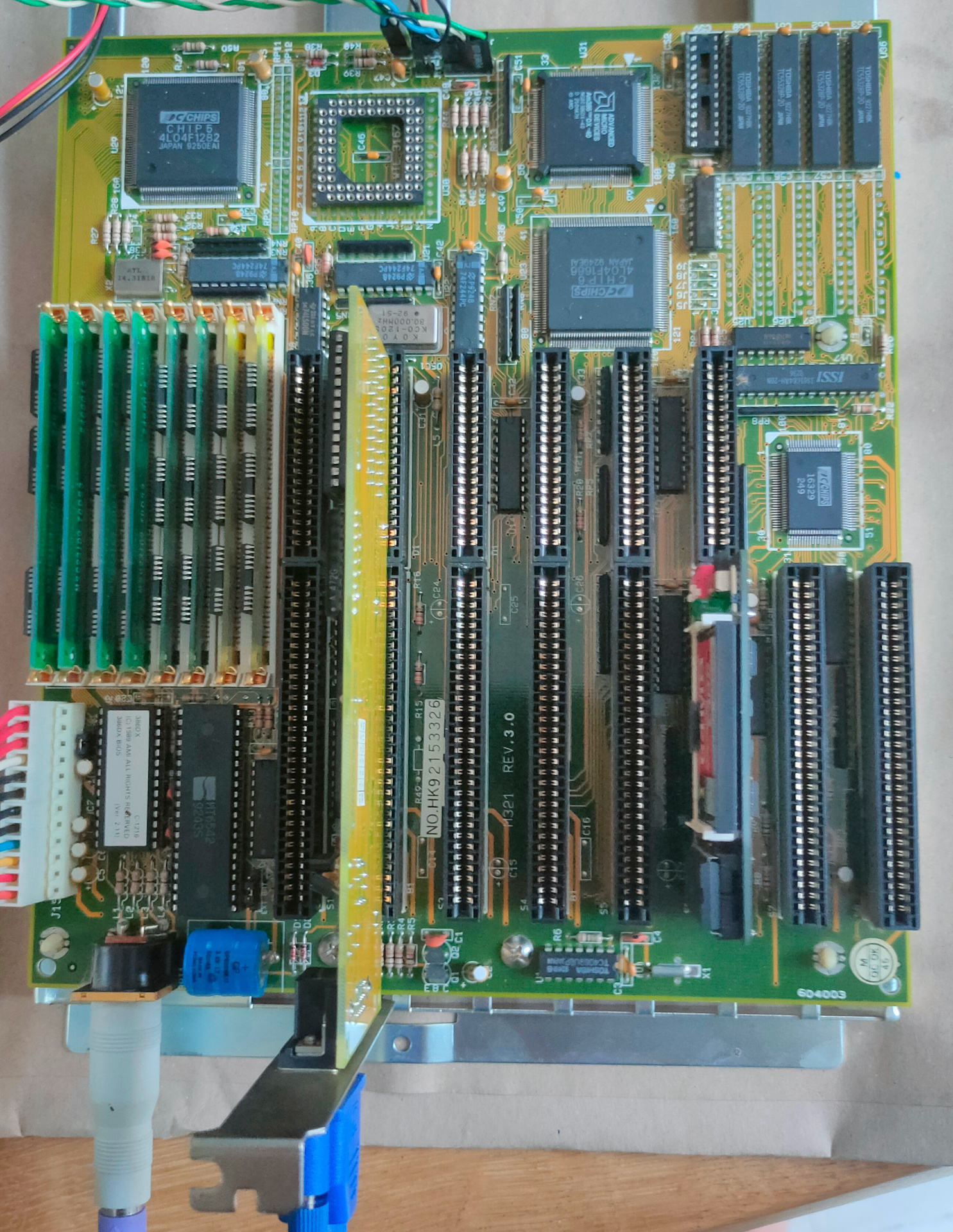
80386 (DX) Computer
Besides my 8088 and 8086 machines I needed a machine which could run our old demo’s. So I bought a new toy.
It has 8Mb Ram and runs at 40Mhz.
I’ve noticed that many of my VGA register manipulation code, can’t be run on a modern VGA monitor, I need to use a CRT for that .. Another thing to buy
Needed to fix arduino code, due to the TFT_eSPI library issues. And I’ve got a S3 with another resolution, but that was an easy fix. Then needed to reinstall nodejs with another version. Had to modify the code because the tcp server would not start. Weird errors logging, but in the end fixed … very cool
I probably end up designing a 3D printed case that looks like a monitor or tv.
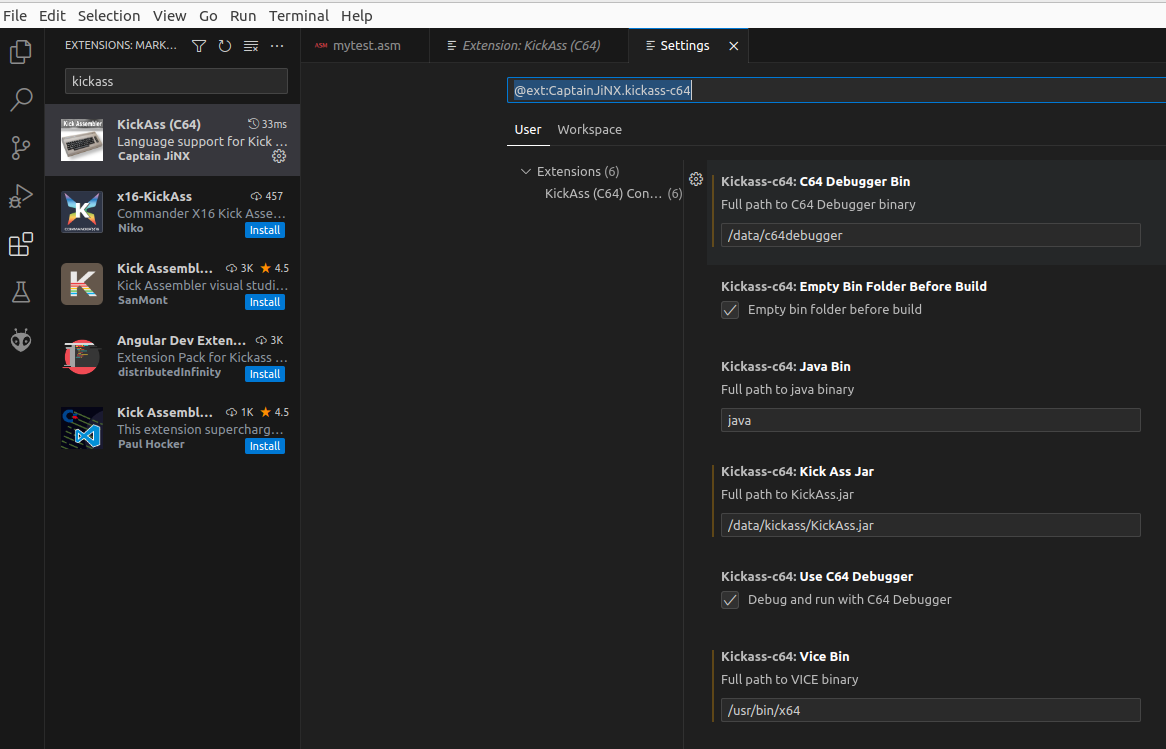
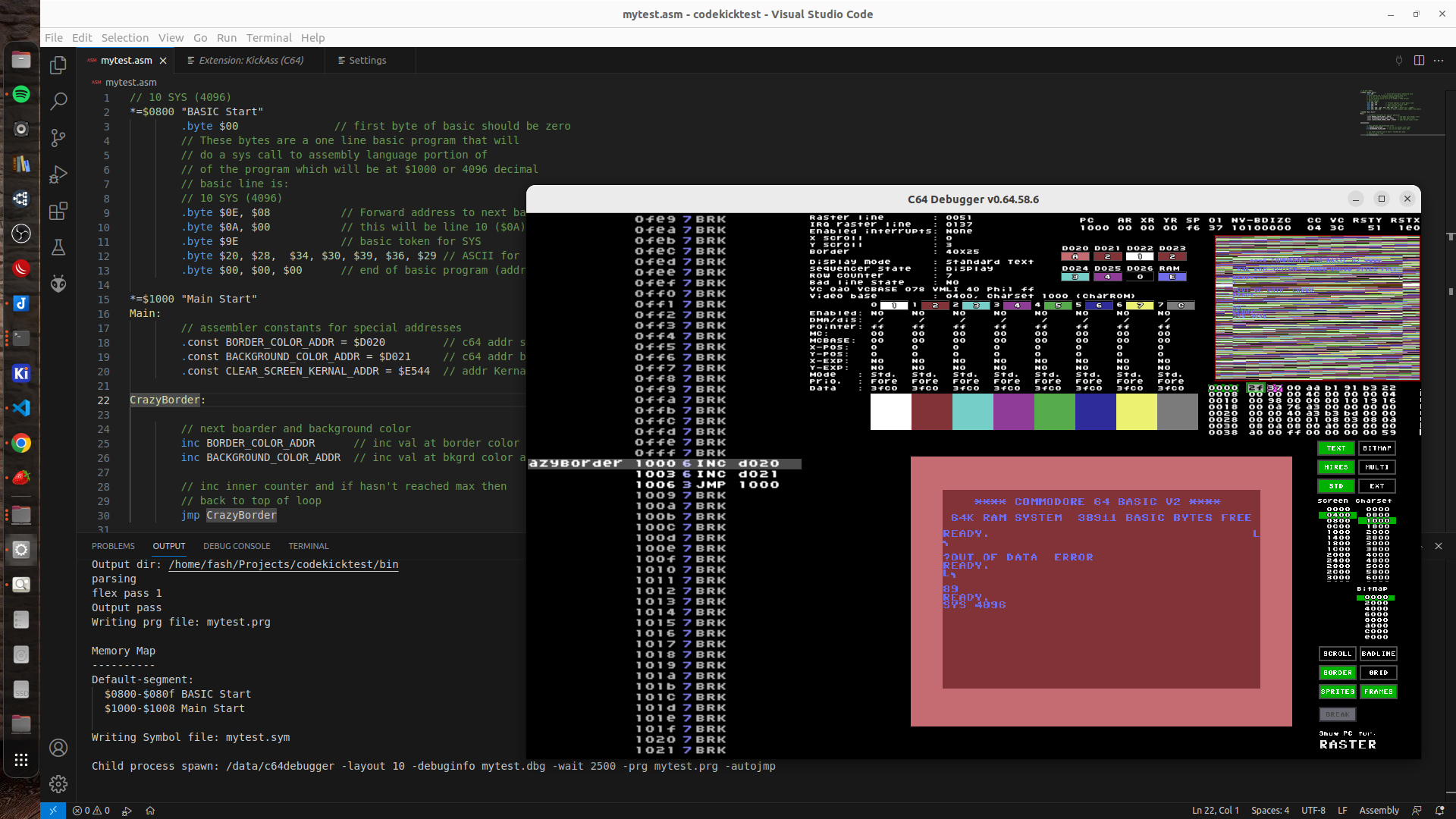
While still having a love-hate relationship with Visual Studio (I’m a Vim guy), here is my C64 coding setup. (for now)
Needed: Vice (C64 emulator (and more)) C64 Debugger (embeds above in an awesome debugger) Visual Studio Kickass C64 assembler (you need java for this) (http://theweb.dk/KickAssembler/Main.html)
Visual Studio click extensions and add kickass by Captain Jinx
https://sourceforge.net/projects/c64-debugger/ This is Commodore 64, Atari XL/XE and NES code and memory debugger that works in real time. It is quick prototyping tool where you can play with Commodore 64 machine and its internals.
Awesome debugger, many many options. Read the README
I’ve got mostly installed in /data Change accordingly
Create new file, press ctrl-shift-p and invoke kickass debug!
Got a question, could I make the video viewer also for images.
Well, that is a great idea, i’ve got some panoramic photos myself.
A little modification, some added code, but here is a working example.
Some vacation pictures widescreen …
CODE imageview.py filename Use esc to stop, and enter for next image. (Has better full screen experience than my movie player. (no padding) have to revisit that one )
Nice to have?
Back button?
Comments, renaming thumb
from pathlib import Path
from sys import platform as PLATFORM
import os
import re
import PySimpleGUI as sg
from PIL import Image, ImageEnhance, ImageTk, ImageOps, ImageFilter
from xml.etree import ElementTree as ET
import sys
from sys import platform as PLATFORM

abspath = os.path.abspath(__file__)
dname = os.path.dirname(abspath)
os.chdir(dname)

try:
    image=sys.argv[1]
except:
    print(sys.argv[0] +  " filename")
    exit()


def nextFile(currentfile,dir):
        newfile=""
        dirpath = os.path.dirname(dir)
        fileList = []
        for f in os.listdir(dirpath):
            #fpath = os.path.join(dirpath, f)
            fpath = f
            if os.path.isfile(fpath) and f.endswith(('.jpg','.JPG')):
                fileList.append(fpath)
        fileList.sort()
        for i in range(len(fileList)):
            try:
                if (fileList[i]) == currentfile:
                    newfile=fileList[i+1]
                    break
            except:
                newfile=fileList[0]
        return newfile
# yeah i know .. no thumb but full image, change it yourself!
def loadthumb(thumbfile):
    # IF exists
    path_to_file = thumbfile
    path = Path(path_to_file)

    if path.is_file():
        im = Image.open(thumbfile)
        im=ImageOps.contain(im, (5760,5760))
        thumbimage = ImageTk.PhotoImage(image=im)

        window['image'].update(data=thumbimage)
    else:
        window['image'].update("")

sg.theme('SystemDefaultForReal')
#------- Layout image only --------#
layout = [
        [[sg.Image('', size=(5760, 1080), key='image',background_color='black',pad=(0, 0))],
          ]]

#------- Set window --------#
window = sg.Window('Triple image player', layout, no_titlebar=True, margins=(0,0),location=(0,0), size=(5760,1080), keep_on_top=True, finalize=True,resizable=False)

window.bring_to_front()
window.Maximize()
window.bind("<Escape>", "-ESCAPE-")
window.bind("<Return>", "-ENTER-")

window['image'].expand(True, True)

loadthumb(image)
nextfile = image
#------------ The Event Loop ------------#
while True:
    event, values = window.read(timeout=1000)       # run with a timeout so that current location can be updated
    if event == sg.WIN_CLOSED:
        break

    if event == '-ENTER-':
        nextfile = nextFile(nextfile,'./')
        loadthumb(nextfile)

    if event == '-ESCAPE-':
        window.close()
window.close()
Converting images for right resolution from a temp directory filled with large panorama photos
ls temp  | while read; do
	convert -resize 5760x -gravity center  -crop 5760x1080 -auto-orient  "temp/$REPLY" "$REPLY"
done
I didn’t find an easy and working movie player for wide screen setups. Like double/triple monitor setups.
I’ve got 3x 1920×1080 monitors connected to my battlestation. With a resolution of 5760×1080
Simple Python code to play a movie fullscreen
# importing vlc module
import vlc

# creating vlc media player object
media_player = vlc.MediaPlayer()

# media object
media = vlc.Media("movie.mp4")

# setting media to the media player
media_player.set_media(media)
media_player.toggle_fullscreen()

# start playing video
media_player.play()
But trying to get this stable working, I resorted to pysimplegui
#!/usr/bin/env python3

import PySimpleGUI as sg
import vlc
import sys
from sys import platform as PLATFORM

try:
    movie=sys.argv[1]
except:
    print(sys.argv[0] +  " filename")
    exit()

sg.theme('DarkBlue')

layout = [[sg.Image('', size=(5760, 1080), key='-VID_OUT-')]]
window = sg.Window('Triple movie player', layout, no_titlebar=True, margins=(0,0),location=(0,0), size=(5760,1080), keep_on_top=True, finalize=True,resizable=False)

window.bring_to_front()
window.Maximize()
window.bind("<Escape>", "-ESCAPE-")
window.bind("<Return>", "-ENTER-")

window['-VID_OUT-'].expand(True, True)

inst = vlc.Instance()
list_player = inst.media_list_player_new()

media_list = inst.media_list_new([])
list_player.set_media_list(media_list)
player = list_player.get_media_player()

if PLATFORM.startswith('linux'):
    player.set_xwindow(window['-VID_OUT-'].Widget.winfo_id())
else:
    player.set_hwnd(window['-VID_OUT-'].Widget.winfo_id())

media_list.add_media(movie)
list_player.set_media_list(media_list)
list_player.play()
while True:
    event, values = window.read(timeout=1000)

    if event == sg.WIN_CLOSED:
        break
    if event == '-ENTER-':
        list_player.play()
    if event == '-ESCAPE-':
        list_player.stop()
        window.close()
window.close()
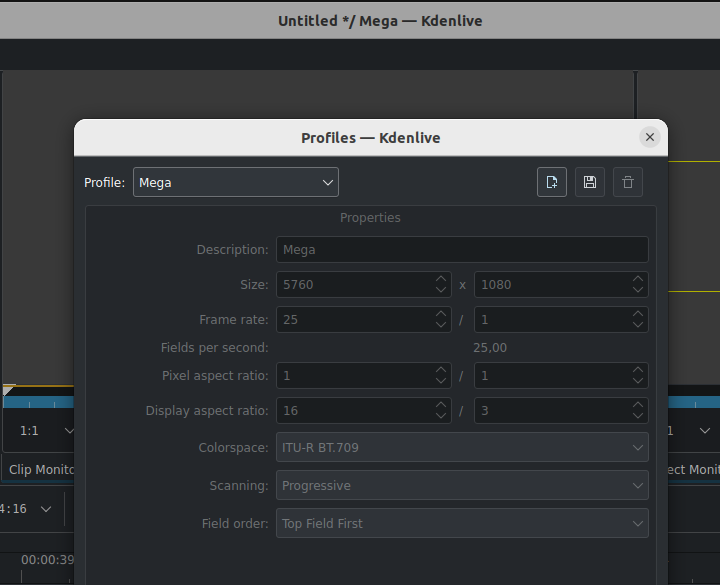
I’ve converted some of my Vuze media to the correct resolution using kdenlive.
I’ve added a new profile. 5760×1080 dont forget to change the display ratio!
Note: I love everything streamable from my own servers. So if its music or movies i tried the lot. (Another post about movie streaming using Jellyfin,Phpmytube and more)
I’ve got music in mp3, flac and ogg and I have been using below players for a long time
If you have any other suggestion mentioned below, let me know!
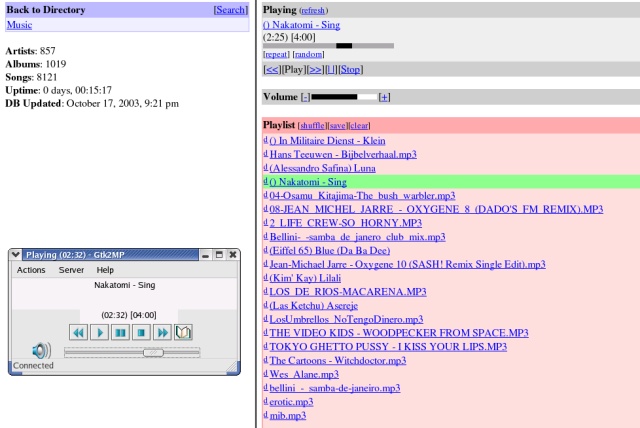
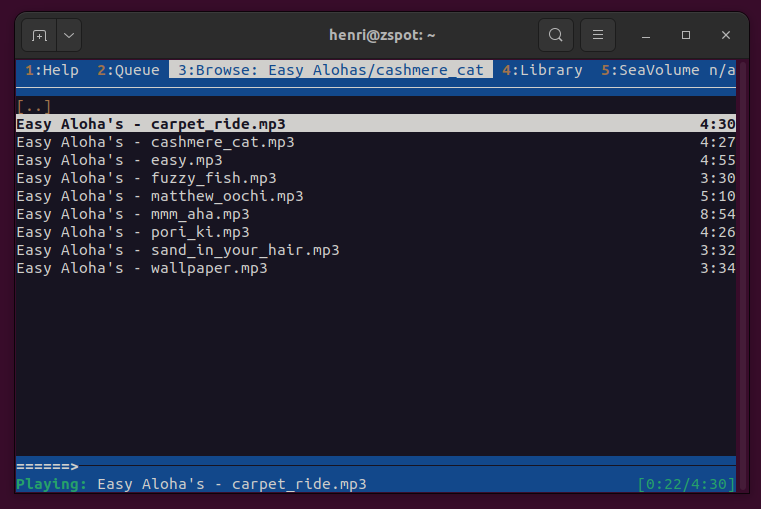
MPD – A linux terminal mp3 player (using ncmpc) XMMS/XMMS2 – Linux gui music player ( The winamp for linux)
Then i moved to
VLC – Sporadic music file playing Clementine – Linux gui player
For a while Audacious, Rhythmbox and Amarok
And later spotify (Btw you CAN use spotify with local files)
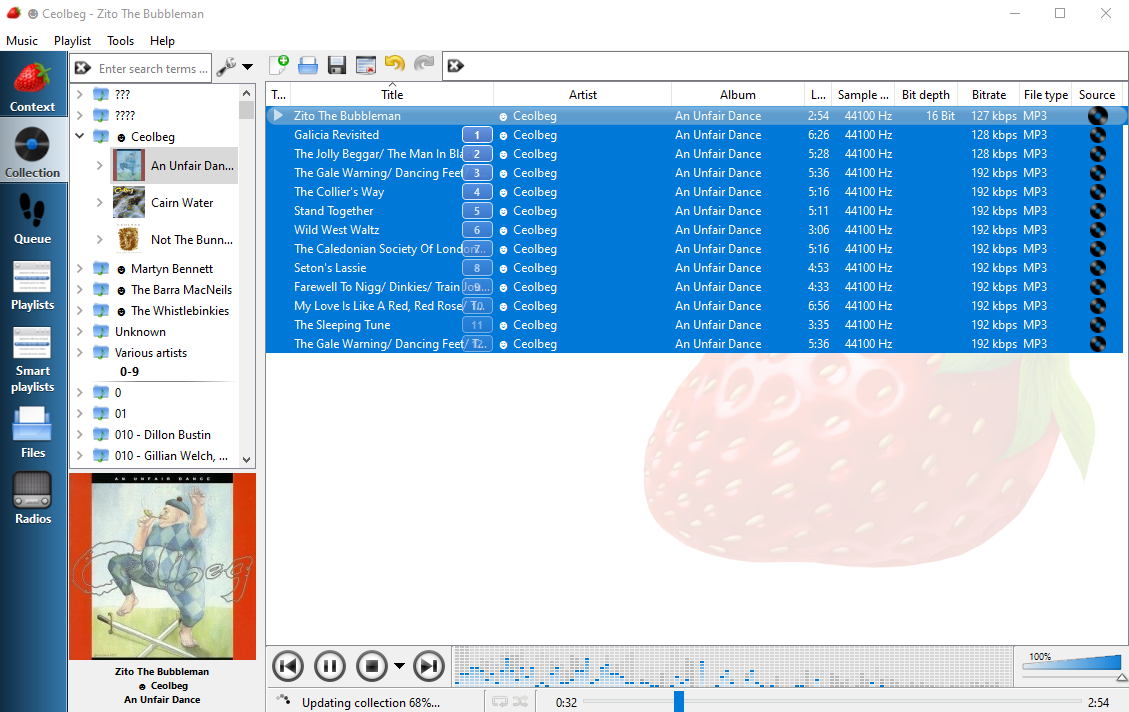
Clementine was not updated very much, so I went with Strawberry Music Player (which is a maintained clone of Clementine)
Tagging mp3s I did using Kid3, Picard and Mp3tag (with wine) Now with Strawberry
For a while I used some webbased mp3 players. I like it when I can stream my music from another location. But none were to my liking. It really has to have a Android client, and a secure connection.
Ampache
Funkwhale
Emby
Subsonic ( android client is $$ and broken)
Volumio
Koel
Jellyfin
In the old days i used even a simple php streamers
Linux OSses I currently use : Ubuntu, Centos/Rocky/Fedora, Raspbian (and msdos lol) Have used: Slackware,Gentoo, Kali, ELive, Suse,Debian,Mint,Puppy,Lubuntu
Window managers I currently use
Xmonad – Tiling window manager
Gnome
Xmonad with clusterssh on 14 servers. (Using my serverpath identify trick)
My girlfriend sometimes asks me what country/language is that? (When seeing written text or hearing people talk)
I’ve studied japanese a long time ago, and I still can read some characters. Sometimes the western words are translated using katakana. Those are easier. ( For years i had a little card in my wallet with katakana, written a large japanese scroll on ricepaper, a computer demo and terminal tools)
Modern Japanese is written in a mixture of three basic scripts: Kanji — which are Chinese ideographic symbols — as well as Hiragana and Katakana — two phonetic alphabets (syllables). There are a few thousand Kanji characters, while Hiragana and Katakana have 46 each
Katakana chart ア a イ i ウ u エ e オ o カ ka キ ki ク ku ケ ke コ ko サ sa シ shi ス su セ se ソ so タ ta チ chi ツ tsu テ te ト to ナ na ニ ni ヌ nu ネ ne ノ no ハ ha ヒ hi フ fu ヘ he ホ ho マ ma ミ mi ム mu メ me モ mo ヤ ya ユ yu ヨ yo ラ ra リ ri ル ru レ re ロ ro ワ wa ン n
So mostly a consonant combined with a vowel. A dash – for a dubble vowel, and a u can be silent.
My name is ヘンリ
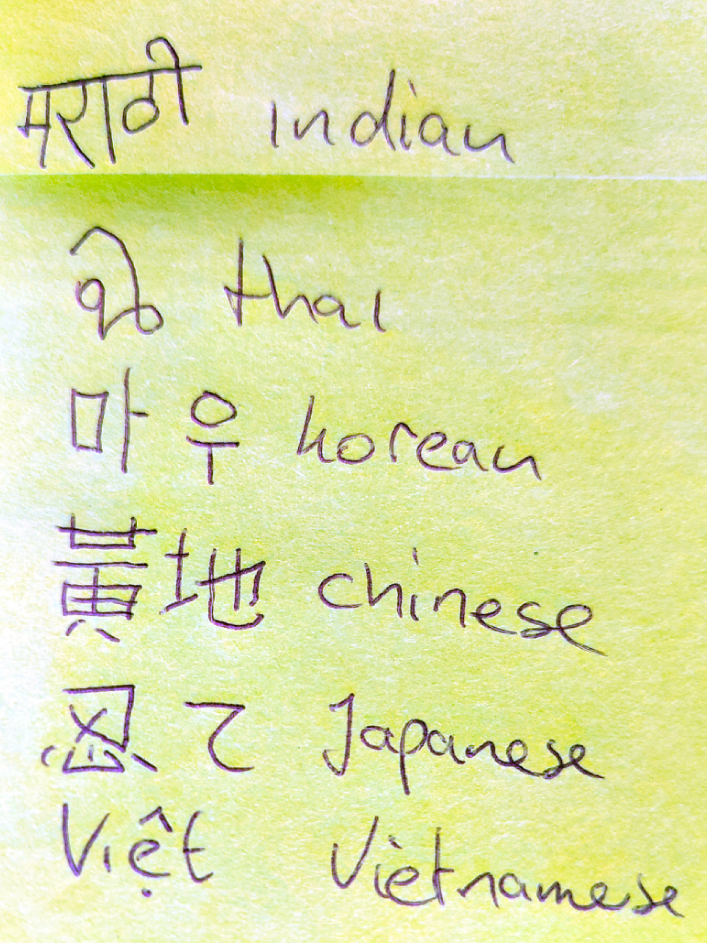
In my mind i use below to identify languages.
Indian: Lines with things hanging from it
Thai: round stuff with circles
Korean: straight lines with circles
Chinese: Very busy lines (blocks filled with lines)
Japanese: Blocks with lines alternated with simple characters
Vietnamese: They borrow chinese characters, rest “western” with dots and ^ ‘ stuff
Spoken language is difficult to explain, but these guys nail it.
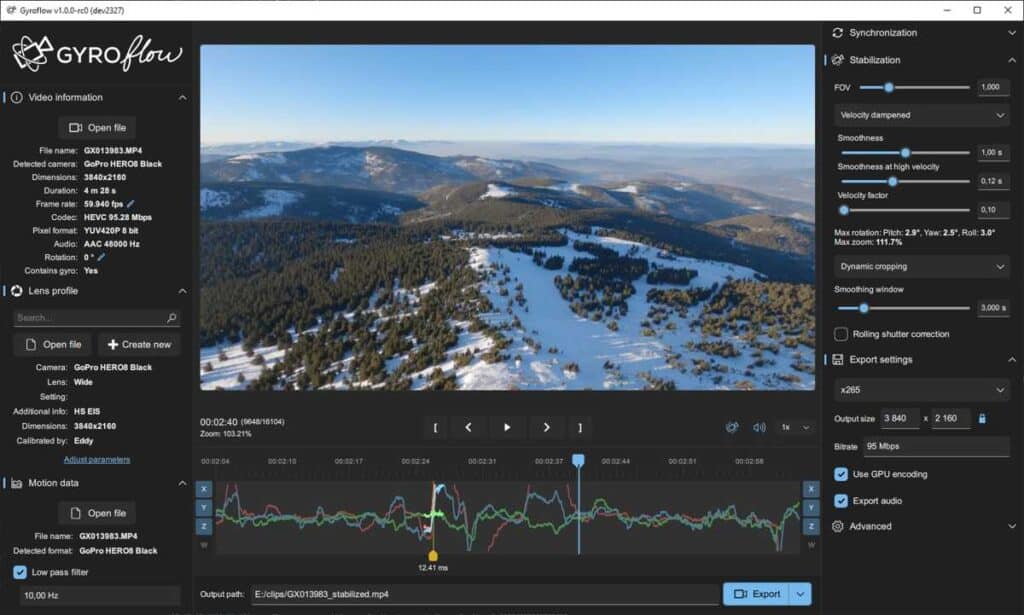
Mostly I use kdenlive, but if you have an actioncam which also records movement (pan, tilt, zoom, and rotation) use a tool like Gyroflow! This will use the motion data to correct the movement!
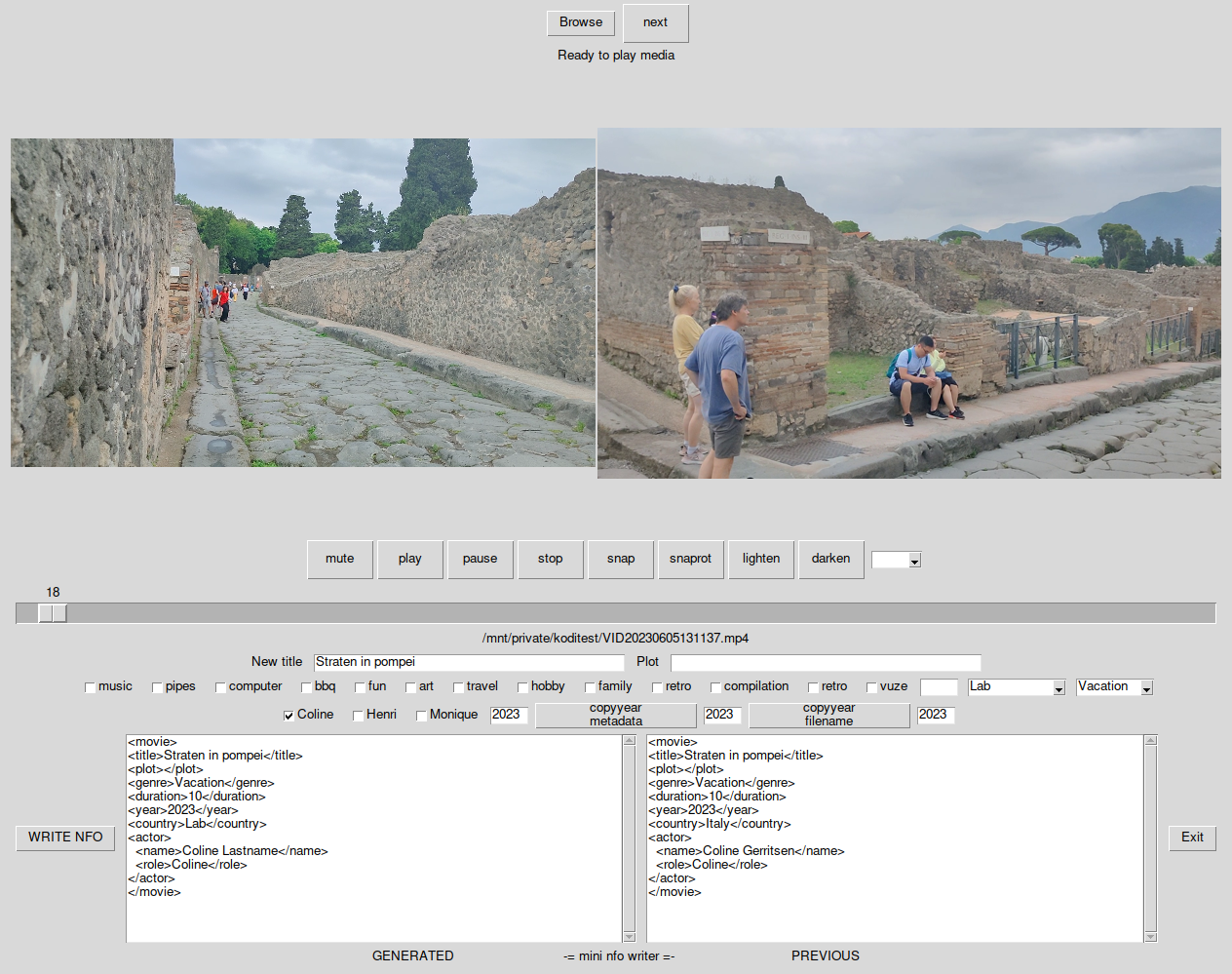
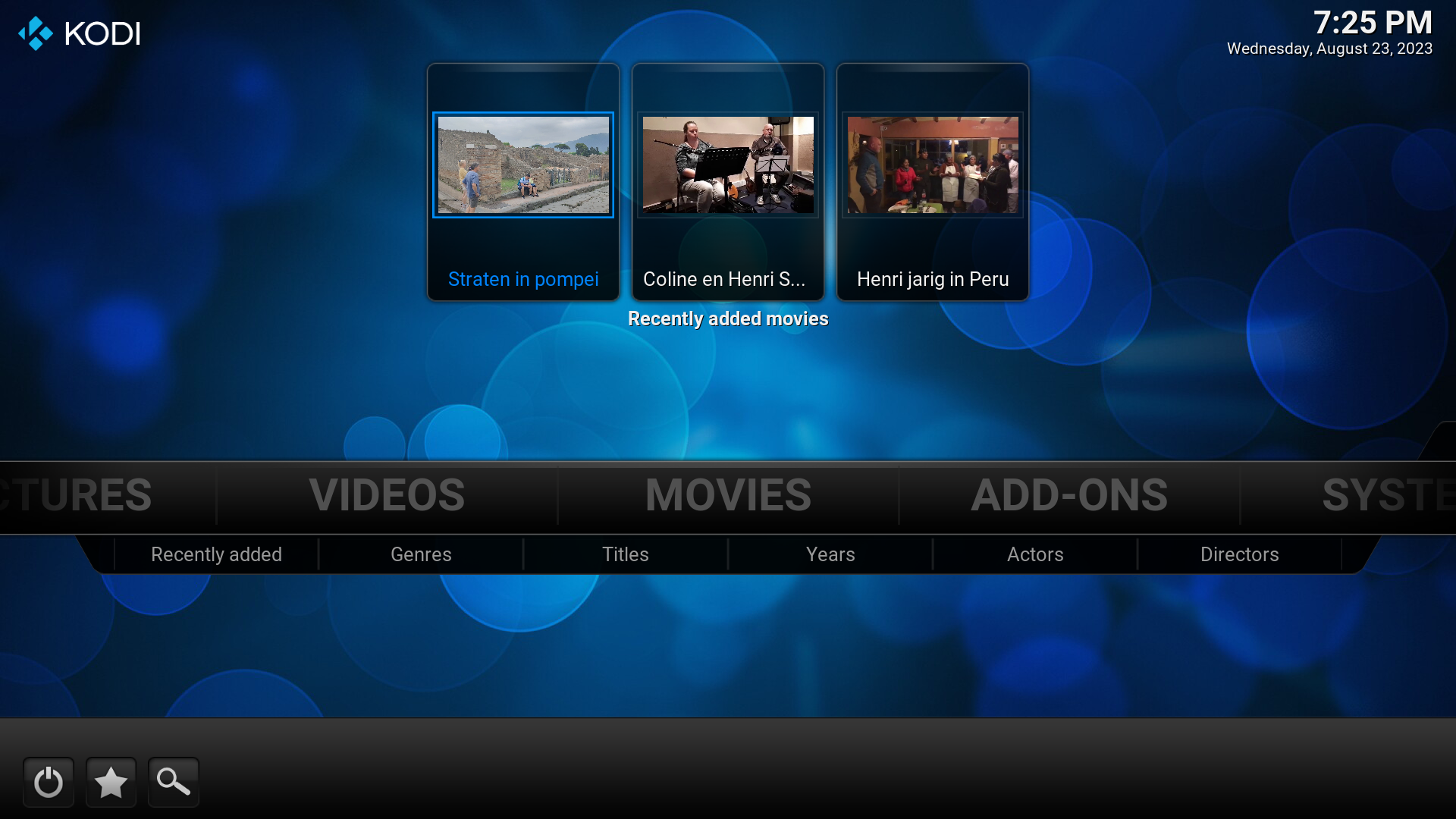
Created this for usage with Kodi, for our own personal movies, which can’t be scraped by movie scrapers obviously. (dvd-rip,digital video, mobile movies, OBS, Vuze and Nikon movies for example)
Needed libraries: (install with pip) pathlib, Pillow, pymediainfo,PySimpleGUI,python-vlc
NFO created
Title – editable (generated from filename) Duration – mediainfo data in seconds Plot – Single line type it yourself Actors – Predefined Tags – Predefined checkboxes Country – Pulldown ( I use this as location, Scotland, Asia, Garden) Year – default 2023, copy button from mobile phone metadata year Genre – Pulldown
Works
File select and loaded
Play movie, scrub thretro movie
Create snapshot
Play/Mute/Pause
Playtimer
Auto update NFO text field with selectable options
Poster art – rotate
Poster art – brightness
Reload Thumb after snapshotting
Year extracted from filename
add tag field
Next file (button AND functionality)
checkboxes from text list
Read NFO from file into fields
Poster art – aspect ratio
Needs work
Wish list
Poster art – contrast?
Low – more mediainfo?
Low – Media rotate??
Some ‘action’ screenshots
The GUI in action (V1)
Kodi example
CODE ( WIP ) V2 I place this python script in every library directory. So i can change the checkboxes and the NFO being generated. I fill the directory with symlinks for every movie I want to have included in this directory, but this is not needed. (thats the way I like to do things) (This is the directory I scrape into Kodi)
from pathlib import Path
from sys import platform as PLATFORM
import os
import re
import PySimpleGUI as sg
import vlc
from pymediainfo import MediaInfo
from PIL import Image, ImageEnhance, ImageTk, ImageOps, ImageFilter
from xml.etree import ElementTree as ET


'''
WARNING, NFO overwrites previous!!


'''

alltags = ["music", "pipes", "computer","bbq","fun","art","travel","hobby","family","retro","compilation","retro","vuze"]

#------- WINDOWS FIX --------#
if PLATFORM.startswith('linux'):
    print("yeah linux baby!")
else:
    os.add_dll_directory(r'E:\VLC')

duration=0
tmptag=""

def nextFile(currentfile,dir):
        newfile=""
        dirpath = os.path.dirname(dir)
        fileList = []
        for f in os.listdir(dirpath):
            #fpath = os.path.join(dirpath, f)
            fpath = f
            if os.path.isfile(fpath) and f.endswith(('.mp4', '.mov', '.mpg','.avi','.mkv','.3gp')):
                fileList.append(fpath)
        fileList.sort()
        for i in range(len(fileList)):
#            print("fileList[i] " + fileList[i])
            try:
                if (fileList[i]) == currentfile:
                    newfile=fileList[i+1]
                    break
            except:
                newfile=fileList
        return newfile

def loadthumb(thumbfile):
    # IF exists
    path_to_file = thumbfile
    path = Path(path_to_file)

    if path.is_file():
        im = Image.open(thumbfile)
        im=ImageOps.contain(im, (640,640))
        thumbimage = ImageTk.PhotoImage(image=im)
        window['thumb'].update(data=thumbimage)
    else:
        window['thumb'].update("")

def loadnfo(file):

    #LOAD NFO
    nfo=file + ".nfo"
    path = Path(nfo)

    if path.is_file():
            f = open(nfo, "r")
            innfo=f.read()
            f.close()
#            print ("file : " + nfo)
            innfo="".join([s for s in innfo.strip().splitlines(True) if s.strip()])

# Clear some fields
            window['year'].update("")
            window['plot'].update("")

            # Update fields test
            if ET.fromstring(innfo).find('country') is not None:
                nfolocation = ET.fromstring(innfo).find('country')
                window['location'].update(value=nfolocation.text)
            if ET.fromstring(innfo).find('year') is not None:
                nfoyear = ET.fromstring(innfo).find('year')
                window['year'].update(nfoyear.text)
            if ET.fromstring(innfo).find('plot') is not None:
                nfoplot = ET.fromstring(innfo).find('plot')
                window['plot'].update(nfoplot.text)
            if ET.fromstring(innfo).find('title') is not None:
                nfotitle = ET.fromstring(innfo).find('title')
                window['-NM-'].update(nfotitle.text)
            if ET.fromstring(innfo).find('genre') is not None:
                nfogenre = ET.fromstring(innfo).find('genre')
                window['genre'].update(value=nfogenre.text)

            window['coline'].update(False)
            window['henri'].update(False)
            window['monique'].update(False)
            for actor in ET.fromstring(innfo).findall('actor'):
                name = actor.find('role').text
                if name == "Coline":
                    window['coline'].update(True)
                if name == "Henri":
                    window['henri'].update(True)
                if name == "Monique":
                    window['monique'].update(True)
            for alltag in alltags:
                window[alltag].update(False)

            if ET.fromstring(innfo).find('tag') is not None:
                for tag in ET.fromstring(innfo).findall('tag'):
                    if tag.text in window.AllKeysDict:
                        window[tag.text].update(True)

            window['coline'].update(False)
            window['henri'].update(False)
            window['monique'].update(False)
            for actor in ET.fromstring(innfo).findall('actor'):
                name = actor.find('role').text
                if name == "Coline":
                    window['coline'].update(True)
                if name == "Henri":
                    window['henri'].update(True)
                if name == "Monique":
                    window['monique'].update(True)
            for alltag in alltags:
                window[alltag].update(False)

            if ET.fromstring(innfo).find('tag') is not None:
                for tag in ET.fromstring(innfo).find('tag'):
                    window[tag.text].update(True)

    else:
        innfo=""
    window['LOADNFO'].update(innfo)


#------- Button definition --------#
def btn(name):
    return sg.Button(name, size=(6, 2), pad=(1, 1))

#def tag(name):
#    return sg.Checkbox(name, enable_events=True)

#------- GUI definition & setup --------#
sg.theme('SystemDefaultForReal')


l1=sg.Text("New title")
l2=sg.Multiline(" ", expand_x=True, key='-OUT-', expand_y=True,justification='left', size=(20,15))
l3=sg.Multiline(" ", expand_x=True, key='LOADNFO', expand_y=True,justification='left', size=(20,15))
l4=sg.Text("Plot")
t1=sg.Input("", key='-NM-')
t2=sg.Input("", key='plot',enable_events=True)
cb=[]

for alltag in alltags:
    cb.append(sg.Checkbox(alltag, key=alltag, enable_events=True))


cb.append(sg.Input("", key='addtag',size=(5, 1), enable_events=True))
cb.append(sg.Combo(["Lab","Datacenter","home","Outside","Outside","Lloydwebber","Steenweg","Enschede","Netherlands","Germany","Italy","Scotland","Canada","Egypt","Belgium","Sweden","Ireland","Asia","NewZealand","Hilversum"],default_value='Lab',key='location'))
cb.append(sg.Combo(["Storage","Funny","Vacation","Music","Relation"],default_value='Storage',key='genre'))
nameyear=[]
nameyear.append(sg.Checkbox("Coline", key='coline', enable_events=True,default=True))
nameyear.append(sg.Checkbox("Henri", key='henri', enable_events=True,default=True))
nameyear.append(sg.Checkbox("Monique", key='monique', enable_events=True,default=False))
nameyear.append(sg.Input("2023",key='year',size=(5, 1), enable_events=True))
nameyear.append(sg.Button("copyyear\nmetadata", key='copymeta', size=(20, 1), pad=(1, 1), enable_events=True))
nameyear.append(sg.Input("",key='metayear',size=(5, 1), enable_events=True))
nameyear.append(sg.Button("copyyear\nfilename", key='copyname', size=(20, 1), pad=(1, 1), enable_events=True))
nameyear.append(sg.Input("",key='fileyear',size=(5, 1), enable_events=True))
b1=sg.Button("WRITE NFO", key='write', enable_events=True)
b2=sg.Button("Exit", key='exit', enable_events=True)

#------- Layout total --------#

layout = [[sg.Input(key='-VIDEO_LOCATION-', visible=False, enable_events=True),
          sg.FileBrowse(file_types=(("Video files", "*.mkv *.mov *.mp4 *3gp *avi *mpg"),)),btn('next')],
          [sg.Text('Load media to start', key='-MESSAGE_AREA-')],
          [sg.Image('', size=(600, 480), key='-VID_OUT-', pad=(1, 1)),sg.Image('', size=(600, 480), key='thumb', pad=(1, 1))],
          [btn('mute'), btn('play'), btn('pause'), btn('stop'), btn('snap'), btn('snaprot'), btn('lighten'), btn('darken'), sg.Combo(["4:3","16:9","9:16"],key='aspect',enable_events=True)],
          [sg.Slider(range=(0, 1000), default_value=1, expand_x=True, enable_events=True, orientation='horizontal', key='-SL-')],
          [sg.Text('org title', key='orgtitle')],
          [l1, t1, l4, t2],[cb],[nameyear],[b1, l2, l3, b2],
          [sg.Text('GENERATED                            -= mini nfo writer =-                              PREVIOUS', key='footer')]
          ]

#------- Set window --------#
window = sg.Window('Mini NFO generator', layout, element_justification='center', finalize=True, resizable=True)
#------- VID out window --------#
window['-VID_OUT-'].expand(True, True)
#------------ Media Player Setup ---------#
inst = vlc.Instance()
list_player = inst.media_list_player_new()
media_list = inst.media_list_new([])
list_player.set_media_list(media_list)
player = list_player.get_media_player()
if PLATFORM.startswith('linux'):
    player.set_xwindow(window['-VID_OUT-'].Widget.winfo_id())
else:
    player.set_hwnd(window['-VID_OUT-'].Widget.winfo_id())

#------------ I Want default mute ---------#
player.audio_set_mute(True)

#------------ The Event Loop ------------#
while True:
    event, values = window.read(timeout=1000)       # run with a timeout so that current location can be updated
    if event == sg.WIN_CLOSED:
        break


    if event == 'mute':
        mutevalue = player.audio_get_mute()
        if mutevalue==0:
            player.audio_set_mute(True)
        if mutevalue==1:
            player.audio_set_mute(False)
    if event == 'play':
        list_player.play()
    if event == 'pause':
        list_player.pause()
    if event == 'stop':
        list_player.stop()
    if event == 'snap':
        list_player.pause()
        filename = values['-VIDEO_LOCATION-']
        shortfilename = filename.rsplit( ".", 1 )[ 0 ]
        newname = shortfilename + "-poster.png"
        player.video_take_snapshot(0, newname, 0, 0)
        loadthumb(newname)
    if event == 'snaprot':
        list_player.pause()
        filename = values['-VIDEO_LOCATION-']
        shortfilename = filename.rsplit( ".", 1 )[ 0 ]
        newname = shortfilename + "-poster.png"
        im1 = Image.open(newname)
        im1 = im1.rotate(90, Image.NEAREST, expand = 1)
        im1 = im1.save(newname)
        loadthumb(newname)

    if event == 'lighten':
        list_player.pause()
        filename = values['-VIDEO_LOCATION-']
        shortfilename = filename.rsplit( ".", 1 )[ 0 ]
        newname = shortfilename + "-poster.png"
        im1 = Image.open(newname)
        im1 = ImageEnhance.Brightness(im1)
        im1 = im1.enhance(1.2)
        im1 = im1.save(newname)
        loadthumb(newname)

    if event == 'darken':
        list_player.pause()
        filename = values['-VIDEO_LOCATION-']
        shortfilename = filename.rsplit( ".", 1 )[ 0 ]
        newname = shortfilename + "-poster.png"
        im1 = Image.open(newname)
        im1 = ImageEnhance.Brightness(im1)
        im1 = im1.enhance(0.8)
        im1 = im1.save(newname)
        loadthumb(newname)

    if event == 'aspect':
        filename = values['-VIDEO_LOCATION-']
        shortfilename = filename.rsplit( ".", 1 )[ 0 ]
        newname = shortfilename + "-poster.png"
        if values['aspect'] == "4:3":
            im1 = Image.open(newname)
            im1 = im1.resize((1920 ,int(1920/4*3)), Image.ANTIALIAS)
            im1 = im1.save(newname)
            loadthumb(newname)
        if values['aspect'] == "16:9":
            im1 = Image.open(newname)
            im1 = im1.resize((1920 ,int(1920/16*9)), Image.ANTIALIAS)
            im1 = im1.save(newname)
            loadthumb(newname)
        if values['aspect'] == "9:16":
            im1 = Image.open(newname)
            im1 = im1.resize((int(1920/16*9),1080), Image.ANTIALIAS)
            im1 = im1.save(newname)
            loadthumb(newname)


    if event == 'write':
        filename = values['-VIDEO_LOCATION-']
        shortfilename = filename.rsplit( ".", 1 )[ 0 ]
        newname = shortfilename + ".nfo"
        f = open(newname, "w")
        f.write(out)
        f.close()
        loadnfo(shortfilename)

    if event == 'copymeta':
        if datefromfile is not None:
            window['year'].update(datefromfile)

    if event == 'copyname':
        if fileyear is not None:
            window['year'].update(fileyear)


    if event == '-SL-':
        pos=int(values['-SL-'])
        player.set_position(pos/ 1000.0)


    if values['coline'] == False:
         colinetext = ""
    if values['coline'] == True:
        colinetext = """<actor>
  <name>Coline Lastname</name>
  <role>Coline</role>
</actor>"""
    if values['henri'] == False:
         henritext = ""
    if values['henri'] == True:
        henritext = """<actor>
  <name>Henri Aanstoot</name>
  <role>Henri</role>
</actor>"""
    if values['monique'] == False:
            moniquetext = ""
    if values['monique'] == True:
        moniquetext = """<actor>
  <name>Monique Lastname</name>
  <role>Monique</role>
</actor>"""


    if event == '-VIDEO_LOCATION-':
        if values['-VIDEO_LOCATION-'] and not 'Video URL' in values['-VIDEO_LOCATION-']:
            media_list.remove_index(0)
            media_list.add_media(values['-VIDEO_LOCATION-'])
            list_player.set_media_list(media_list)
            shortname = values['-VIDEO_LOCATION-']
            shortname = shortname.rsplit( "/", 1 )[ 1 ]
            nextfile=nextFile(shortname,"./")
            shortname = shortname.rsplit( ".", 1 )[ 0 ]
            window['-NM-'].update(shortname) # only add a legit submit
            list_player.stop()
            list_player.next()
            thumbname=shortname + "-poster.png"
            loadthumb(thumbname)

            #Print org title
            window['orgtitle'].update(values['-VIDEO_LOCATION-'])


            loadnfo(shortname)


            #DURATION
            mi = MediaInfo.parse(values['-VIDEO_LOCATION-'])
            duration=int(mi.tracks[0].duration/1000)

            #DATE FROM media
            metadate=mi.tracks[0].encoded_date
            if metadate is not None:
                datefromfile=next(iter(re.findall(r"[1][9][8-9][0-9]|[2][0][0-9]{2}", metadate)), None)
                window['metayear'].update(datefromfile)

            # YEAR FROM FILENAME
            fileyear=next(iter(re.findall(r"[1][9][8-9][0-9]|[2][0][0-9]{2}", shortname)), None)
            # year from filename
            if fileyear is not None:
                window['fileyear'].update(fileyear)


    if event == 'next':

        values['-VIDEO_LOCATION-'] = nextfile
        window['-VIDEO_LOCATION-'].update(nextfile)

        if values['-VIDEO_LOCATION-'] and not 'Video URL' in values['-VIDEO_LOCATION-']:
            media_list.remove_index(0)
            media_list.add_media(values['-VIDEO_LOCATION-'])
            list_player.set_media_list(media_list)
            shortname = values['-VIDEO_LOCATION-']
 #           shortname = shortname.rsplit( "/", 1 )[ 1 ]
            nextfile=nextFile(shortname,"./")
            #print(nextfile)
            shortname = shortname.rsplit( ".", 1 )[ 0 ]
            window['-NM-'].update(shortname) # only add a legit submit
            list_player.stop()
            list_player.next()
            thumbname=shortname + "-poster.png"
            loadthumb(thumbname)

            #Print org title
            window['orgtitle'].update(values['-VIDEO_LOCATION-'])


            loadnfo(shortname)

            #DURATION
            mi = MediaInfo.parse(values['-VIDEO_LOCATION-'])
            duration=int(mi.tracks[0].duration/1000)

            #DATE FROM media
            metadate=mi.tracks[0].encoded_date
            if metadate is not None:
                datefromfile=next(iter(re.findall(r"[1][9][8-9][0-9]|[2][0][0-9]{2}", metadate)), None)
                window['metayear'].update(datefromfile)

            # YEAR FROM FILENAME
            fileyear=next(iter(re.findall(r"[1][9][8-9][0-9]|[2][0][0-9]{2}", shortname)), None)
            # year from filename
            if fileyear is not None:
                window['fileyear'].update(fileyear)
#        media_list.add_media(nextfile)
##        shortname = nextfile.rsplit( ".", 1 )[ 0 ]
##        window['-NM-'].update(shortname) # only add a legit submit
#        print(nextfile)
#        window['-VIDEO_LOCATION-'].update(nextfile)
#        list_player.next()
# hier moeten wat update dingen bij!


    # Add tag
    if event == 'addtag':
        tmptag="<tag>" + values['addtag'] + "</tag>"

#------------ exit ---------#

    if event=='exit':
         exit()
#------------ TAGS ---------#

    subs=[x.Text for x in cb if x.get()==True]
    for idx, x in enumerate(subs):
        subs[idx]="<tag>" + subs[idx] + "</tag>"


    if values['year'] == False:
        year=str(2023)
    else:
        year=values['year']
    if values['location'] == False:
        location="Lab"
    else:
        location=values['location']
    if values['plot'] == False:
        plot=""
    else:
        plot=values['plot']
    if values['genre'] == False:
        genre="Storage"
    else:
        genre=values['genre']
#------------ NFO TEXT FIELD ---------#

    out="""<movie>
<title>{}</title>
<plot>{}</plot>
<genre>{}</genre>
<duration>{}</duration>
<year>{}</year>
<country>{}</country>
{}
{}
{}
{}
{}
</movie>
""".format(values['-NM-'],plot,genre,duration,year,location,colinetext,henritext,moniquetext,tmptag, "\n".join(subs))
    out="".join([s for s in out.strip().splitlines(True) if s.strip()])
    window['-OUT-'].update(out)

#------------ Messages and timer ---------#

    # update elapsed time if there is a video loaded and the player is playing
    if player.is_playing():
        window['-MESSAGE_AREA-'].update("{:02d}:{:02d} / {:02d}:{:02d}".format(*divmod(player.get_time()//1000, 60),
                                                                     *divmod(player.get_length()//1000, 60)))
    else:
        window['-MESSAGE_AREA-'].update('Load media to start' if media_list.count() == 0 else 'Ready to play media' )

window.close()
"If something is worth doing, it's worth overdoing."